
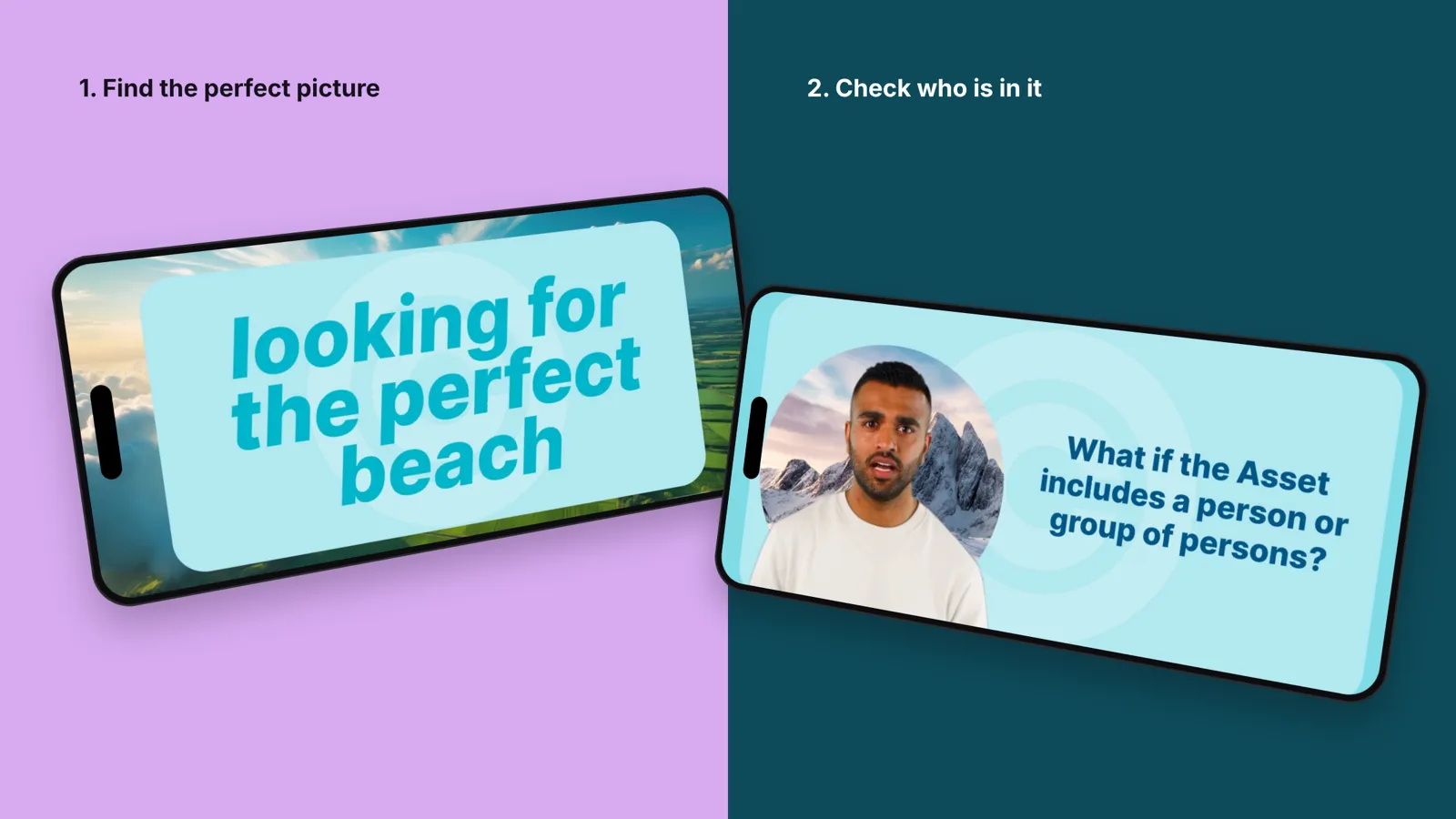
Everyone’s a publisher.
Image rights and AI, taught as four questions anyone can ask.
Some of your people expect AI to do everything. Others expect it to replace them. Our AI training for employees shows them what it does in their job, what it doesn’t, and what the rules are.
A free first call. You bring the subject, we bring how we’d approach it.
People can tell the practical reality from the promises and the fears. They know where AI helps in their role, where its output needs checking, and what never goes into it. Curiosity takes the place of both panic and blind trust.
Most AI training explains the tools. The training that changes behaviour answers three questions for each role: what AI is good for here, where it goes wrong, and what never goes into it.
Before anyone opens a tool, say out loud what people are worried about: their job, their judgement, getting it wrong in front of others. Training that skips this gets polite attendance and no change. Name the fear, then show what AI actually does in their role, using their own tasks as the examples.
A buyer, an engineer and an HR adviser use AI for different things and face different risks. One generic course for everyone ends up useful to no one. Pick three or four real tasks for each role and show the before and after.
The most important AI skill isn’t writing prompts. It’s knowing when the output is wrong. Show people real examples of confident, plausible mistakes, and give them a habit for checking facts, figures and sources before anything leaves their desk.
A policy nobody has opened protects nobody. Translate it into the handful of moments people meet every week: can I paste this client document in? Can I use this image? Who do I ask? Short scenarios work better than a list of rules. Our image rights case does exactly this, with four questions anyone can ask.
In the EU, the AI Act already expects organisations that use AI to make sure their staff have a sufficient level of AI literacy. Wherever you are, the tools change every few months. Treat AI training as a programme: a core module, short refreshers, and a place where people share what works.
Image rights and AI, taught as four questions anyone can ask.
Tell us about it. In one conversation, we’ll tell you what we’d do and whether we’re the right people. No fee, no obligation.
Test us on one subject