
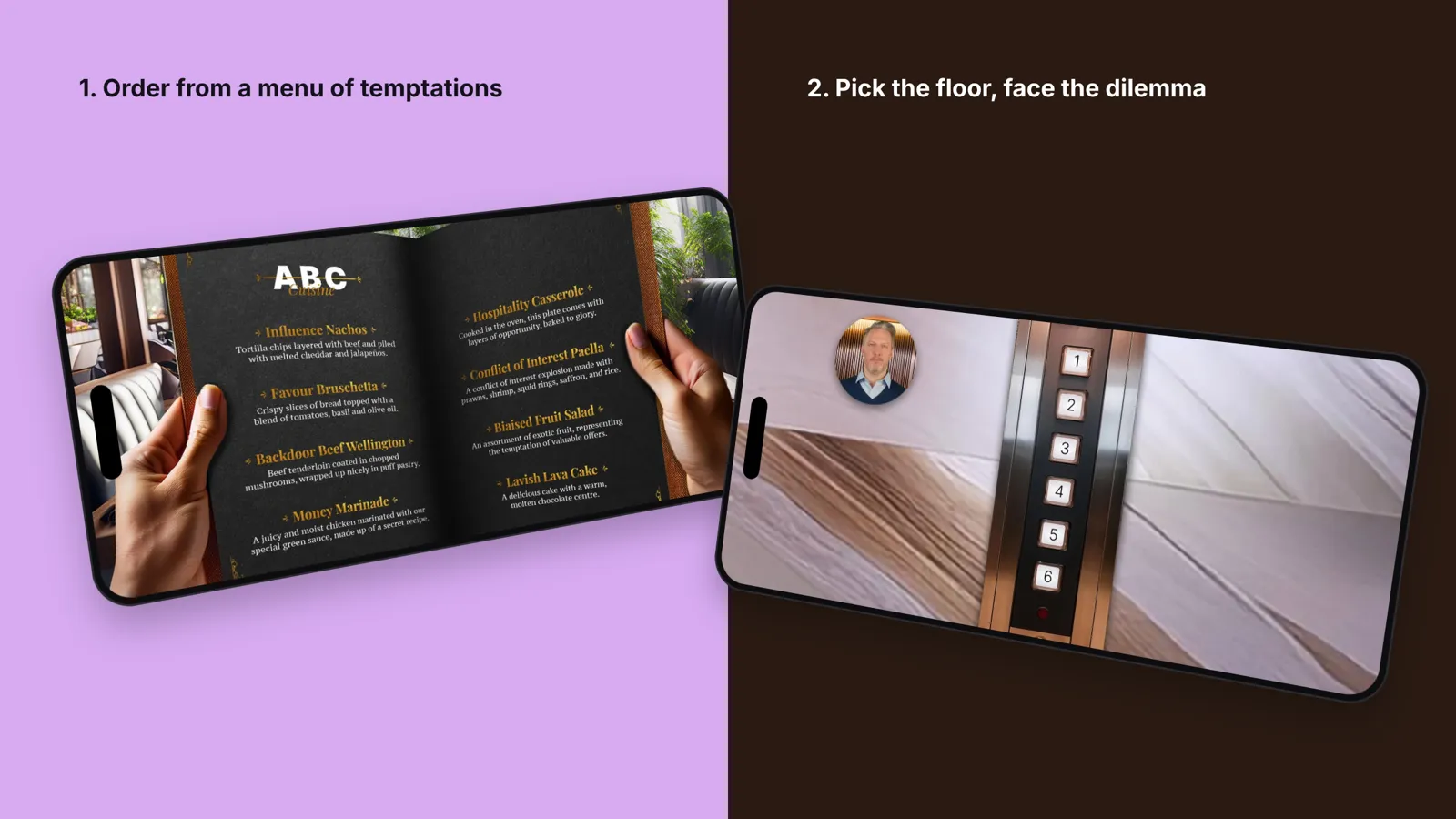
Anti-bribery and corruption
Mandatory training for 150,000 people, rebuilt as an immersive story.
People can’t act on what they don’t understand. We turn the complicated thing into a story people can follow the first time, and remember the second.
A free first call. You bring the subject, we bring how we’d approach it.
Engagement isn’t excitement. Nobody needs to love your new transformation. They need to understand it well enough to explain it to a colleague. Good engagement does four things:
Mandatory training for 150,000 people, rebuilt as an immersive story.
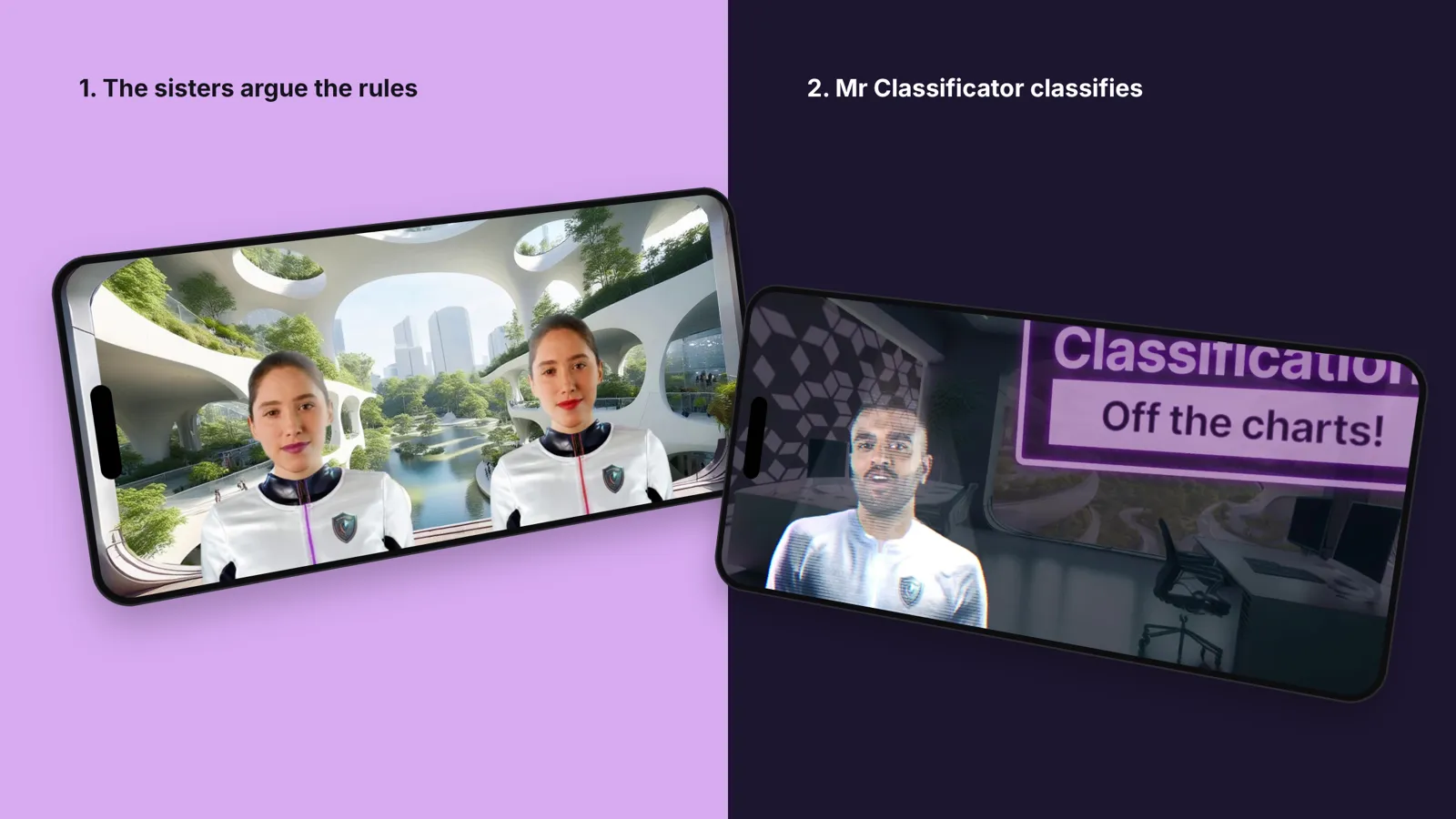
Export control made visible by a cast of characters, one Guardian per rule.
Internal comms makes sure the message goes out. We make sure it’s understood when it arrives. The best projects have both.
Often that’s the point. We write and design material leaders can deliver in their own voice, so the story comes from inside the company.
It usually is. We build around the idea, which tends to hold, and keep the details easy to update.
We start with the understanding, not the format. First, we find the idea that makes the subject click. Then we choose the best way to bring it to life, whether that’s a film, an interactive experience, a visual guide or a presentation.
That’s the job. We don’t remove the important complexity; we make it easier to follow. People should finish with a clearer understanding of the subject, not a misleadingly simplified version of it.
That’s a useful place to start. We can help separate what is decided, what is still uncertain and what people need to understand now.
Not from views, attendance or completion rates alone. We can build in checks that reveal whether people can explain the central idea, recognise what it means for their role and identify what they need to do next. The right measures depend on the subject and the behaviour you’re trying to support.
Test us on one subject, and we’ll show you where we’d start.
Test us on one subjectA free first call. You bring the subject, we bring how we’d approach it.