Cleared for take-off.
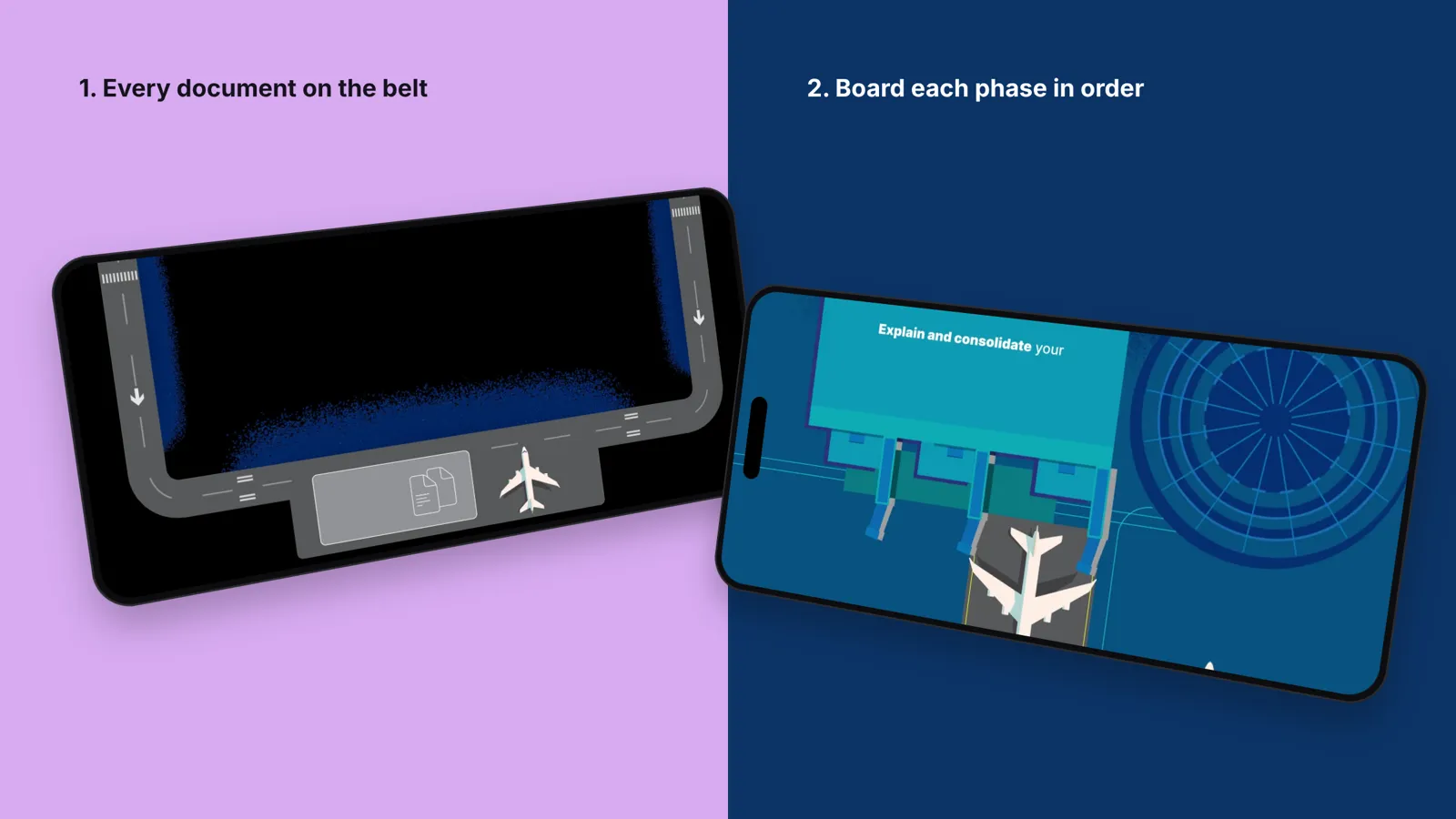
A procurement procedure taught as a flight, with the same skeleton at every step.
The new operating model is drawn, approved and announced. Then people go back to their spreadsheets. We handle the people side of operating model change, so everyone can see how it runs and where they fit.
A free first call. You bring the subject, we bring how we’d approach it.
People can explain the new model in their own words: who does what, who decides, and how work moves between teams. They stop keeping the old system alive on the side, because the new one makes sense to them.
A new operating model is drawn as boxes and arrows. People experience it as new decisions, new handovers and new people to ask.
For each role, spell out what they now decide, what they hand over and who they go to. That’s the part of the model people actually live in.
If people don’t see the problem, the new model looks like reorganisation for its own sake. Show what wasn’t working, with examples they’ll recognise.
Follow one real piece of work, from request to delivery, through the new model. One worked example beats the forty-box slide. We taught a procurement procedure as a flight, with the same skeleton at every step.
If every manager explains the model differently, people keep the old one going in spreadsheets. Give managers one story and the answers to the questions they’ll be asked.
As long as the old reports, meetings and approvals still exist, people will use them. Switch them off on a date everyone knows.
After launch, look for the handovers that stall and the decisions nobody owns. Fix them quickly, and say that you did.
A procurement procedure taught as a flight, with the same skeleton at every step.
Tell us about it. In one conversation, we’ll tell you what we’d do and whether we’re the right people. No fee, no obligation.
Test us on one subject