A problem-solving standard, taught with a car that won’t start.
Everyone solves problems every day. Few people do it the same way twice. The client wanted one problem-solving standard across the whole company, and training that made sense to an engineer, a buyer and a project manager alike.
The challengeOne problem-solving standard for every job
The client had a problem-solving standard and a culture it wanted everyone to share: describe a problem properly, prioritise it, choose the right approach, involve the right people and follow one workflow to a lasting fix. The audience was everyone, in every function and language. Problem-solving methods are usually taught on production examples, which lose half the room, or in the abstract, which loses the rest. And many people already had their own way of dealing with problems, from fixing them fast to waiting for them to go away.
What we deliveredProblem solving training with a car that won’t start
- 1An Alignment Brief with the client’s problem-solving experts: what the standard asks of everyone, which steps people skip, and the five habits worth changing first.
- 2A Story Blueprint built on one idea: learn the method on a problem everyone already understands, then take it to work.
- 3A 30-minute interactive problem solving training course in several languages, with a guide called Zoe and a running case: John and his car.
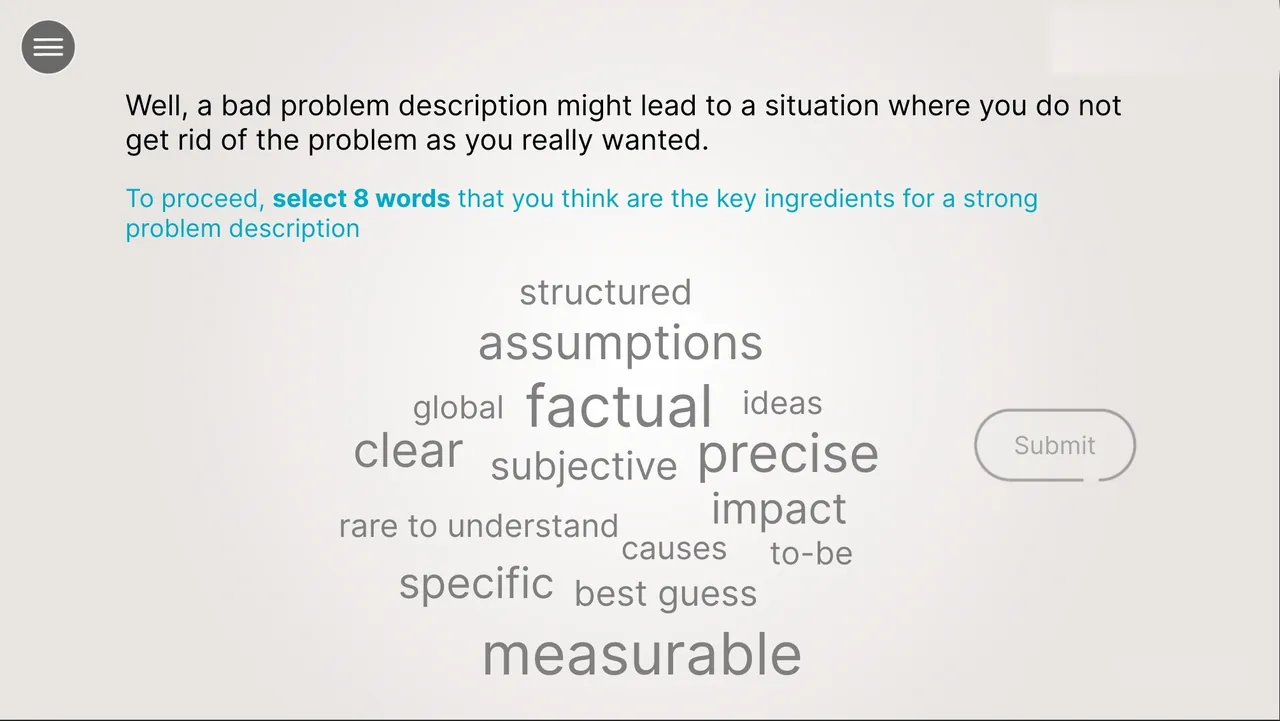
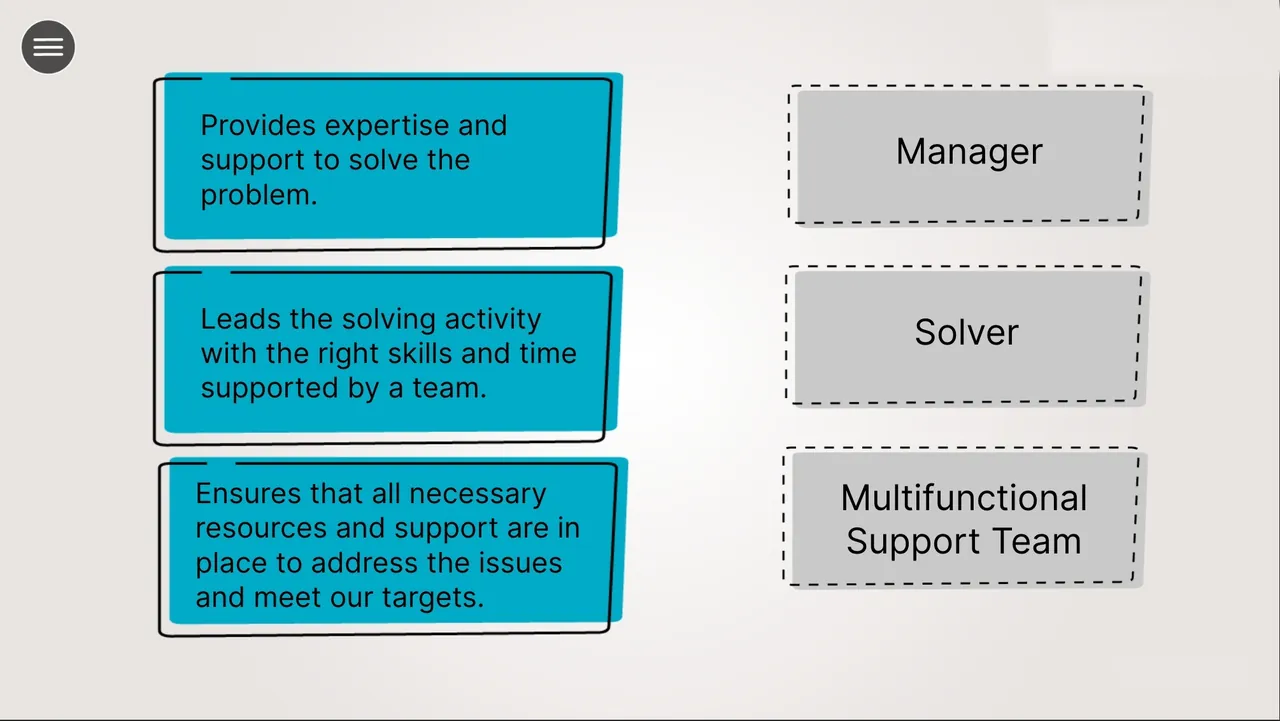
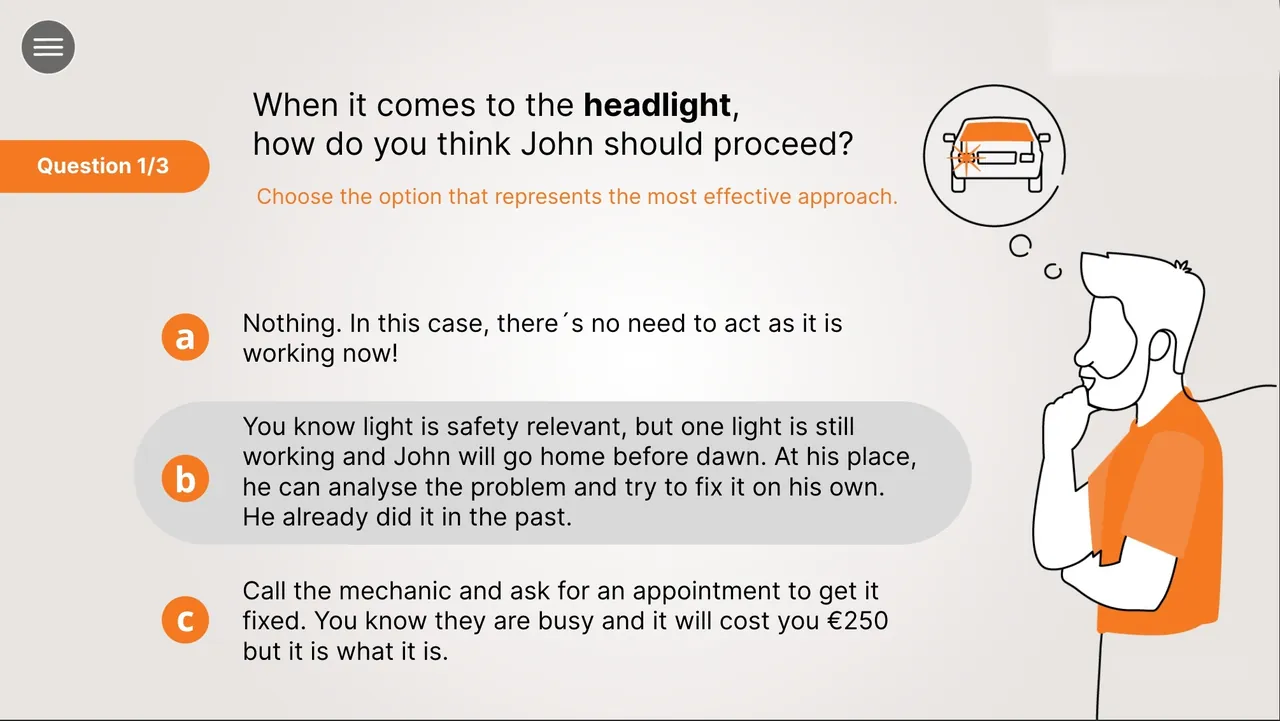
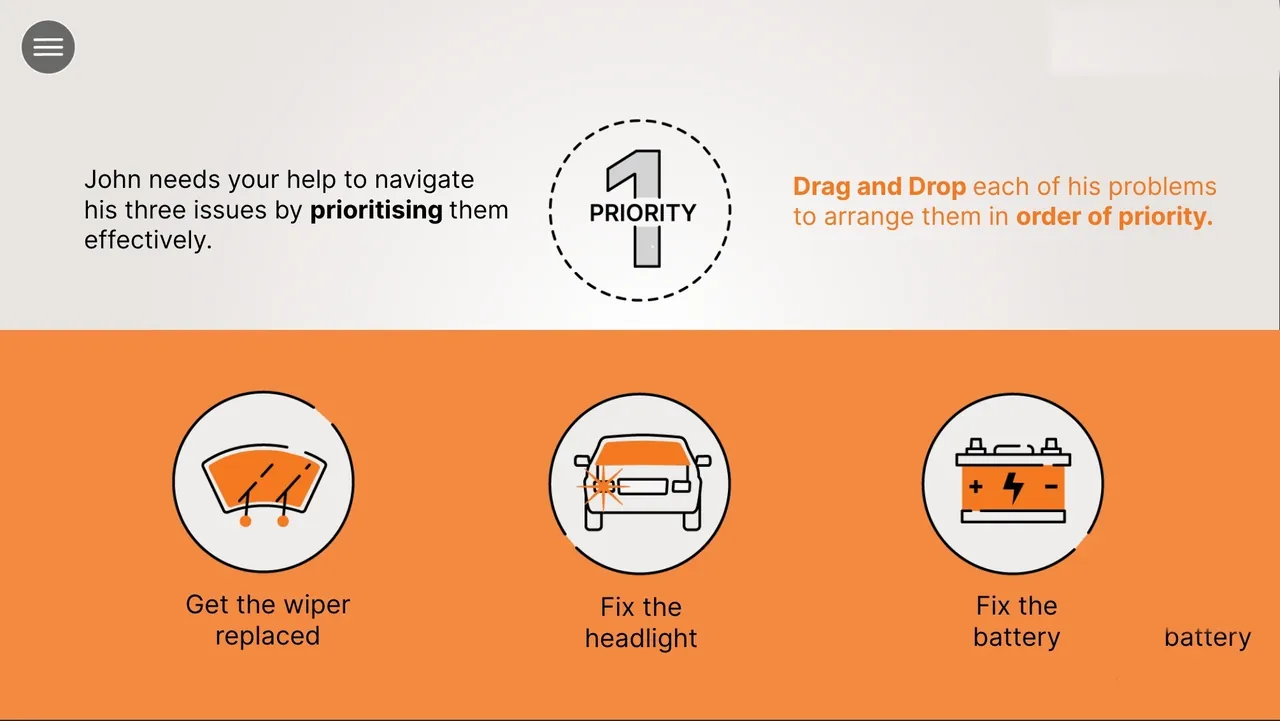
- 4Practice at every step: prioritising John’s three problems, choosing how to handle each one, picking the words of a good problem description, rating severity, occurrence and detection on sliders, matching real workplace problems to the right approach, assigning roles, a puzzle of key takeaways and a final quiz.
The idea, and why it workedLearn the method on a problem everyone understands
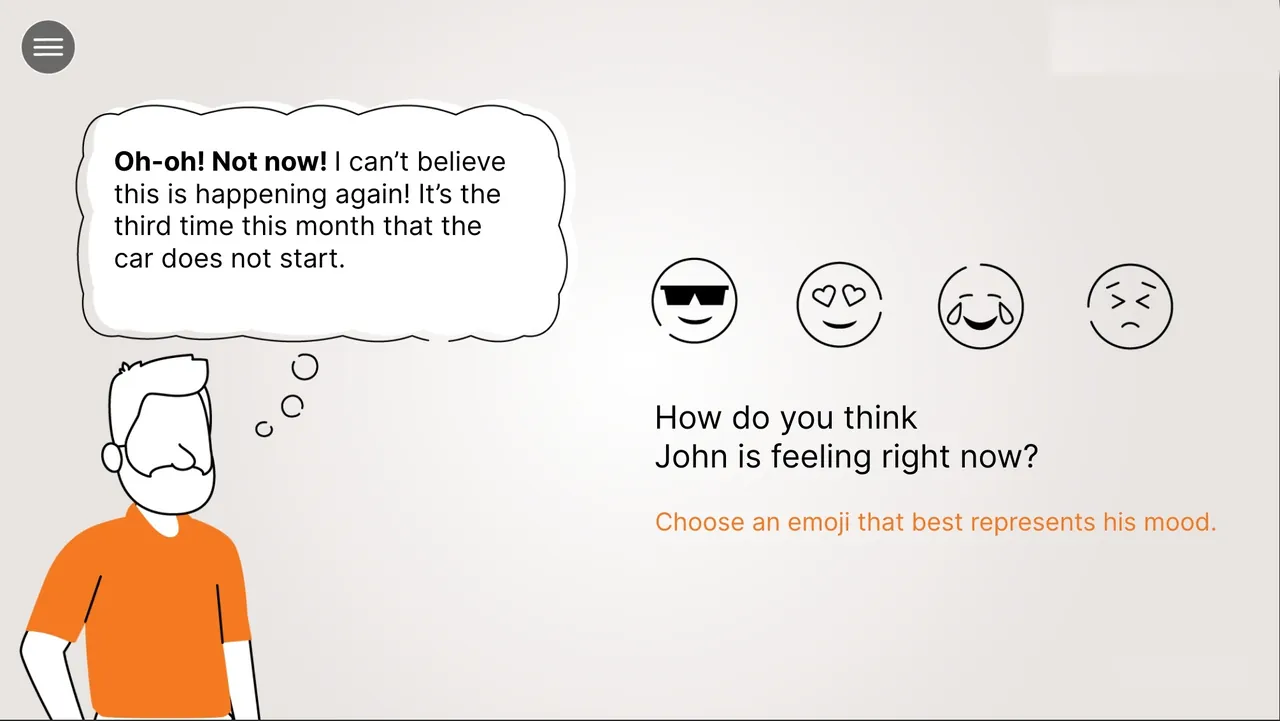
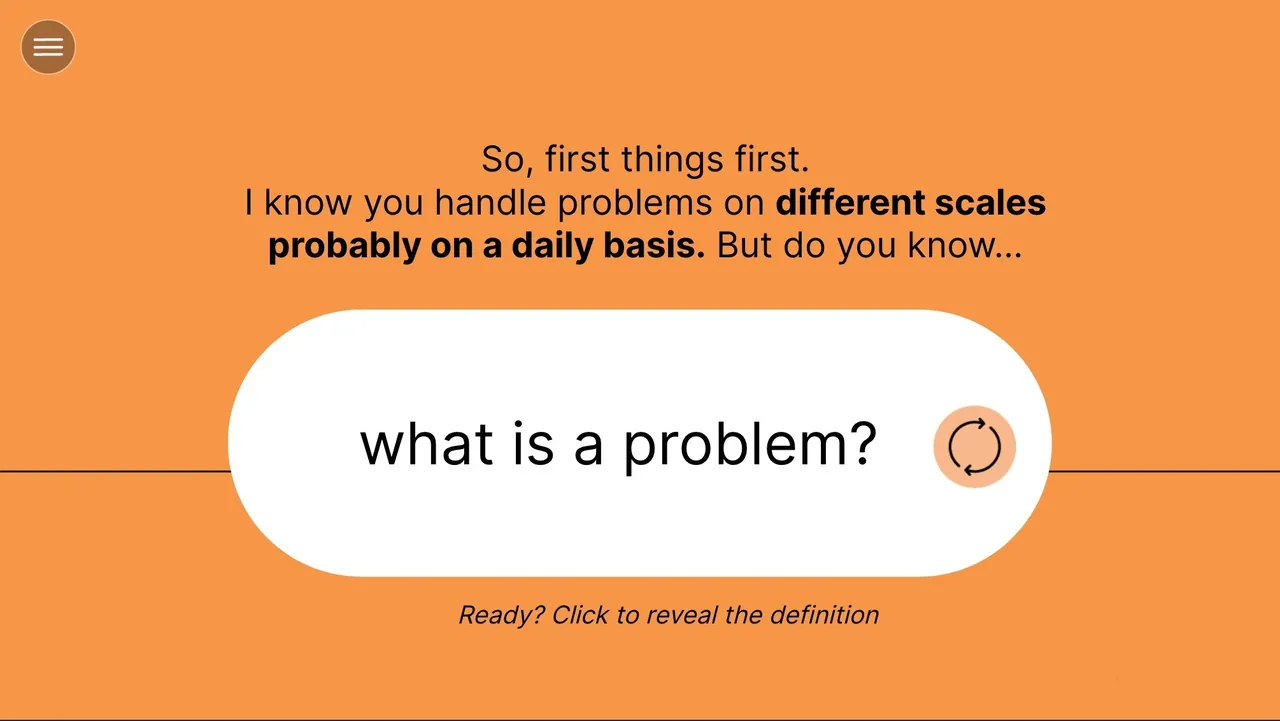
The course opens with a question about your own habits, with answers like “I wait for it to disappear”. Then it introduces John. His car won’t start for the third time this month, a headlight is out and the wiper is smearing the windscreen. Learners help him prioritise, decide what he can fix himself and what needs an expert, and why replacing the battery again would be the wrong move. Zoe then turns John’s car into the five tips of the standard: describe the problem with 5W2H, prioritise by severity, occurrence and detection, choose a light or a full approach depending on complexity and impact, know who solves, supports and decides, and follow the workflow. Only then does the course move to real cases from the client’s work, such as parts delivered to the wrong side of the aircraft or a missed project milestone.
It worked because people learnt the method on a problem they had already lived through. Once the method made sense on the car, it made sense on the job, and the course showed when not to use the full method too: you don’t need a sledgehammer to crack a nut.