
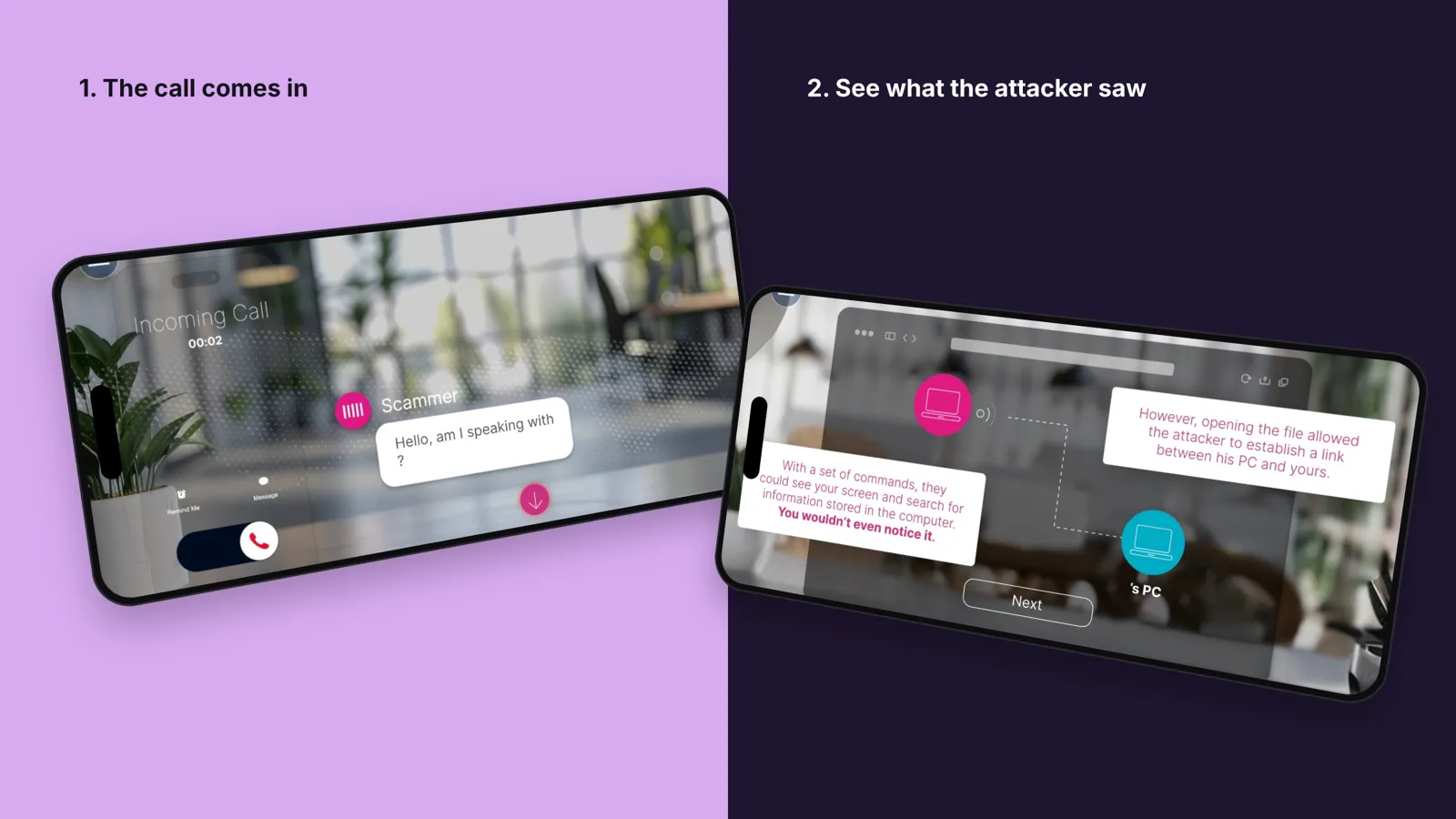
Phishing.
A phishing course that attacks you first, using what you told it about yourself.
Completion rates prove people clicked through. They don’t prove anyone knows what to do when it matters. We design custom compliance training that changes what people do.
A free first call. You bring the subject, we bring how we’d approach it.
People recognise the risky moment when it arrives in their own job, not in a quiz. They know what to do, who to ask, and why it matters. The policy stays the same. What changes is that it finally makes sense. And it rarely needs to be longer than what you have now.
Most compliance training is built to prove people completed it. Training that changes behaviour is built around the moment someone has to make a call.
List the five or six moments where someone in your audience could get it wrong: the gift that arrives, the email with a drawing attached, the request that skips a step. Build the training around those moments, and leave the rest of the policy for reference.
Most people assume compliance is about someone else, usually a salesperson somewhere far away. Show them situations from their own job. Our anti-bribery course for 150,000 people started from exactly that problem.
A list of rules is forgotten by the next day. A character, a place or a story people can picture is not. In our export control course, every rule had its own Guardian.
Scenarios where people choose and see the consequence teach more than a quiz on definitions. Our phishing course attacks the learner first, using what they told it about themselves.
A catalogue course explains the law. A custom course explains your rules, your processes and your grey areas, in your company’s language. If the risk is specific to you, the training should be too.
Completion rates satisfy the audit. Also ask: do people ask the right questions, escalate earlier, make fewer of the errors you see today? Design the training so you can tell.
A phishing course that attacks you first, using what you told it about yourself.
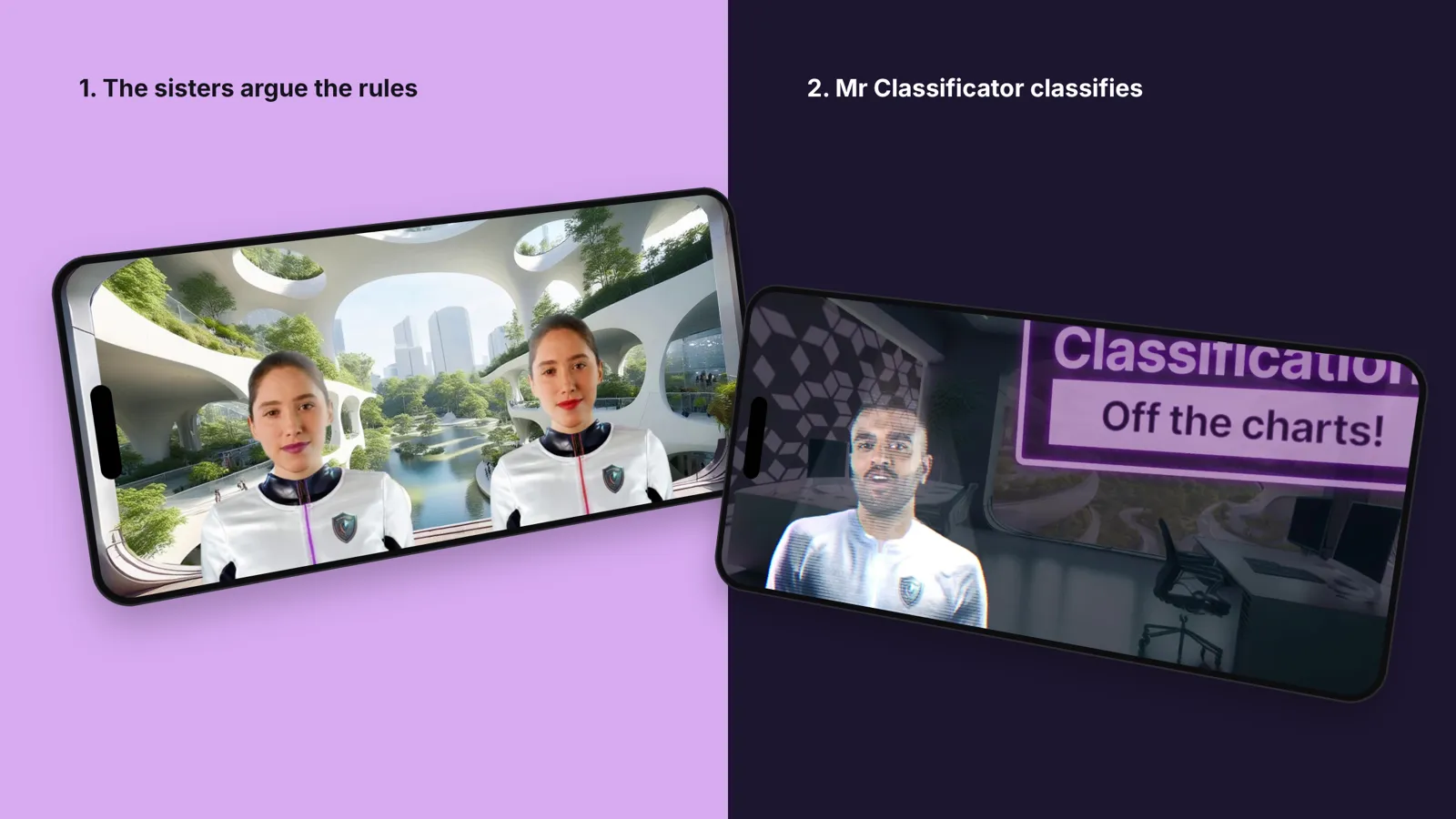
Export control made visible by a cast of characters, one Guardian per rule.
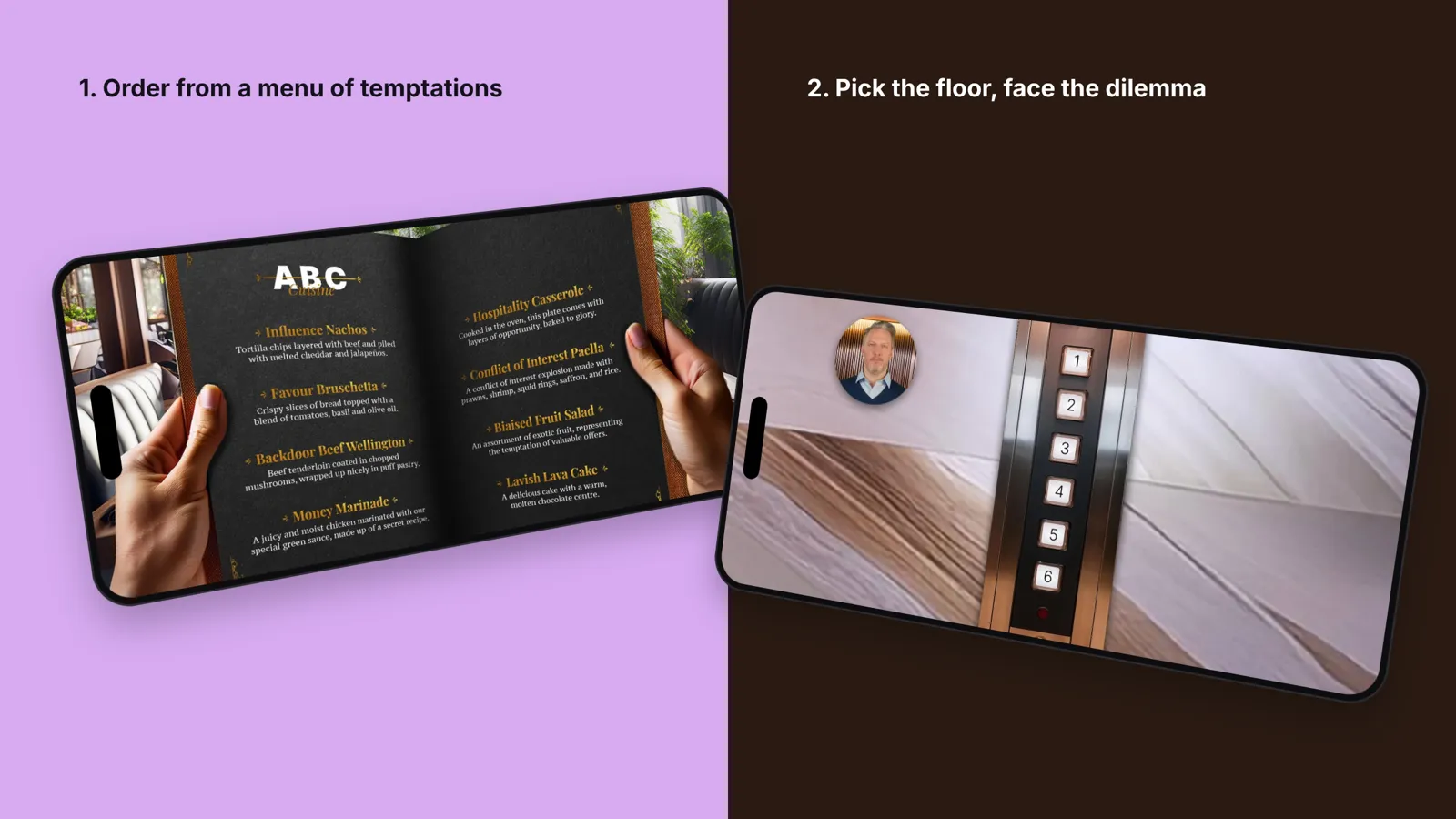
Mandatory training for 150,000 people, rebuilt as an immersive story.
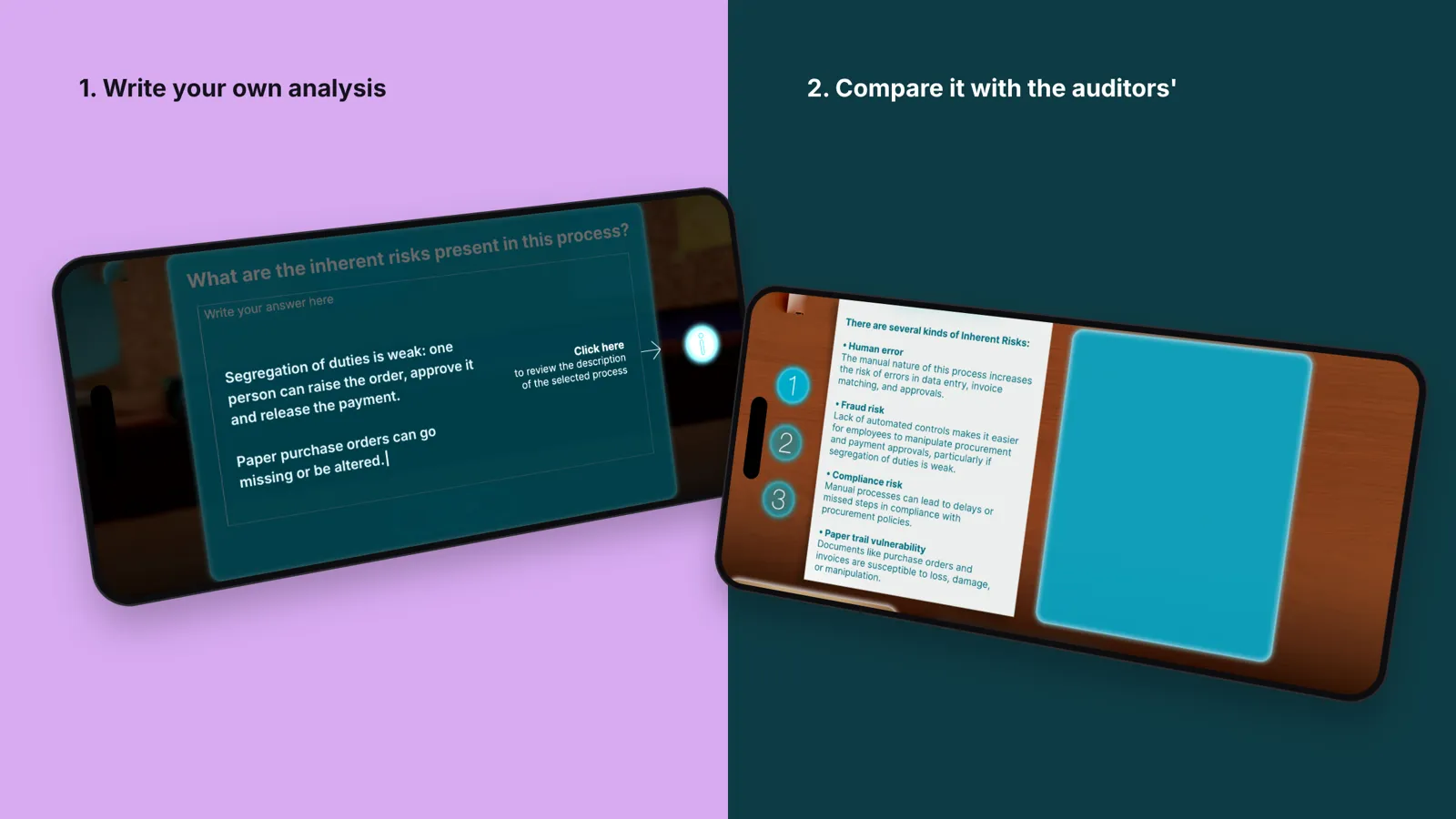
An audit method nobody applied correctly. One module became three.
Tell us about it. In one conversation, we’ll tell you what we’d do with it and whether we’re the right people. No fee, no obligation.
Test us on one subject