Rules that are invisible until they’re broken.
An email with a drawing attached. A file uploaded to the cloud. To the law, either can be an export. To most people, neither looks like one, which is what export control training has to change.
The challengeExport rules people break without noticing
Export control rules are strict, international and mostly invisible. They cover goods, but also software, technical data, services and agreements, and they apply to an email as much as to a crate. The client needed every employee to understand that the rules exist, that they touch ordinary work, and what to do about it: classify, label, check sanctions, ask. Most people had never thought of themselves as exporters. And the subject comes with acronyms, lists and codes that make people switch off before they get to the part that concerns them.
What we deliveredFour export control modules, one Guardian per rule

- 1An Alignment Brief with the client’s export control team: what everyone needed to recognise, and the everyday actions that make someone an exporter without knowing it.
- 2A Story Blueprint built on one idea: travel to a future that stayed safe, and meet the Guardians who kept it that way.
- 3Four short export control eLearning modules, 5 to 10 minutes each, in several languages: an introduction, classification, technical information, and sanctions and diversion, each with its own Guardian.
- 4Interactive challenges in every module, a quiz, downloadable key takeaways and a badge at the end of each, so people collect all four.

The idea, and why it workedA future that stayed safe, and the Guardians who kept it
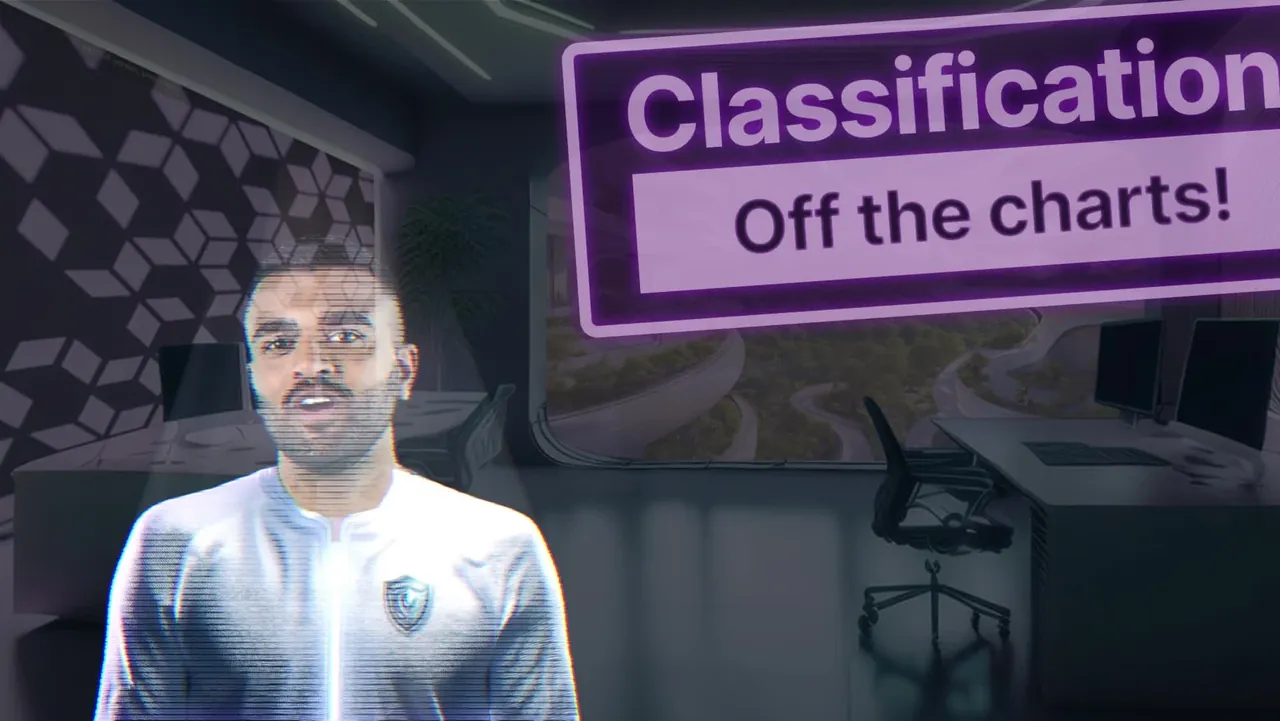
The learner is a time traveller visiting a bright future, built by people in the past who got export control right. Each module introduces a Guardian. Mika welcomes them and explains why the rules exist. Mr Classificator, who started classifying everything after a “Great Classification Crisis”, classifies the learner too: “Classification: eager learner.” Two sisters, Sanction and Diversion, argue all the way through: one keeps the rules, the other keeps looking for a way round them, and her ideas are exactly the red flags people need to spot. DJ Tech-Tech-Techno sorts information into technical and non-technical playlists and explains marking and labelling like the labels on a record.
It worked because every abstract concept got a character, and the tension inside the rules became a conversation between two sisters. People remember characters long after they’ve forgotten definitions.