Everyone uses the brand. Few were ever shown how.
A brand is usually explained to the people who design it. The client wanted brand training for the people who use it, which is everyone.
The challengeBrand guidelines nobody outside design had been shown
Most employees meet their company’s brand as a set of rules: a logo they mustn’t stretch, colours with codes, templates they’re told to use. They follow the rules when someone checks and improvise when nobody does. And because nobody explained what a brand is for, the rules feel like decoration being policed. The client wanted more than correct logos. They wanted employees to understand why a brand is worth protecting, what it does for a company, and what every slide, email and presentation does to it.

What we deliveredShort brand training modules for every employee, on a phone
- 1An Alignment Brief with the client’s brand team: what people needed to understand about brands in general, and what they needed to do with this one.
- 2A Story Blueprint built on one idea: start with the brands people already love.
- 3A series of short brand training modules, each built around short animated videos and designed to work on a phone.
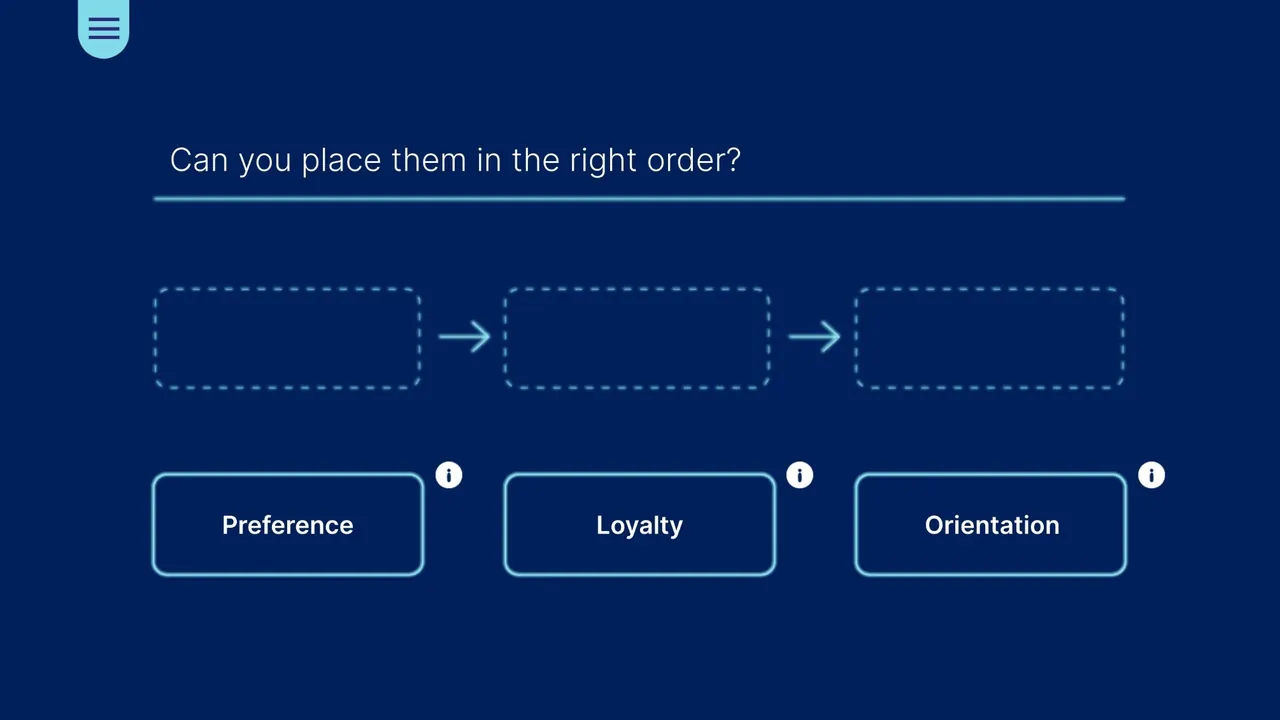
- 4Light interactions to check understanding, such as putting the stages of a brand relationship in order, and key takeaways to keep.
The idea, and why it workedStarting with the brands people already love
Everyone is already a brand expert, as a customer. People know which trainers they’d queue for, which coffee they’d cross the street for, which logo they’d recognise from a corner of it. So every video started there, with a brand people already know, and then turned the camera around to their own. If you understand why a famous brand never changes its colours, you understand why your company’s guidelines exist. The first module explains why brands matter at all: people have to hear about you, then like what you offer, then keep coming back. The later modules move from the why to the how, day to day.
It worked because people stopped seeing the guidelines as rules about a logo and started seeing them as a promise that every employee helps keep.