It’s just an email. It’s also an export.
A year after the Guardians, the client wanted export control training that went deeper on the two moments where people break the rules without noticing: travelling with data, and sharing it.
The challengeTravelling with data, and sharing it
Most export control mistakes aren’t deliberate. An engineer takes design files on a business trip without clearance. A colleague forwards a partner’s drawings to a supplier abroad to save a day. Both feel like ordinary work. The client’s 2026 programme needed to make those two moments recognisable, show exactly what should happen instead, and make asking the export control officer the obvious first step, not an admission of failure.

What we deliveredExport control training on travel and email
- 1An Alignment Brief with the client’s export control team: the two everyday situations that cause the most risk, and the checks that prevent them.
- 2A Story Blueprint built on one idea: teach with a colleague’s near miss, then replay it the right way.
- 3Two 8-minute export control training modules in several languages: Essentials to Travel, built around a business trip, and Intangible Management, built around an email.
- 4A travel checklist for before, during and after a trip, five key takeaways for each module to download, and a quiz.
The idea, and why it workedA colleague’s near miss, replayed the right way
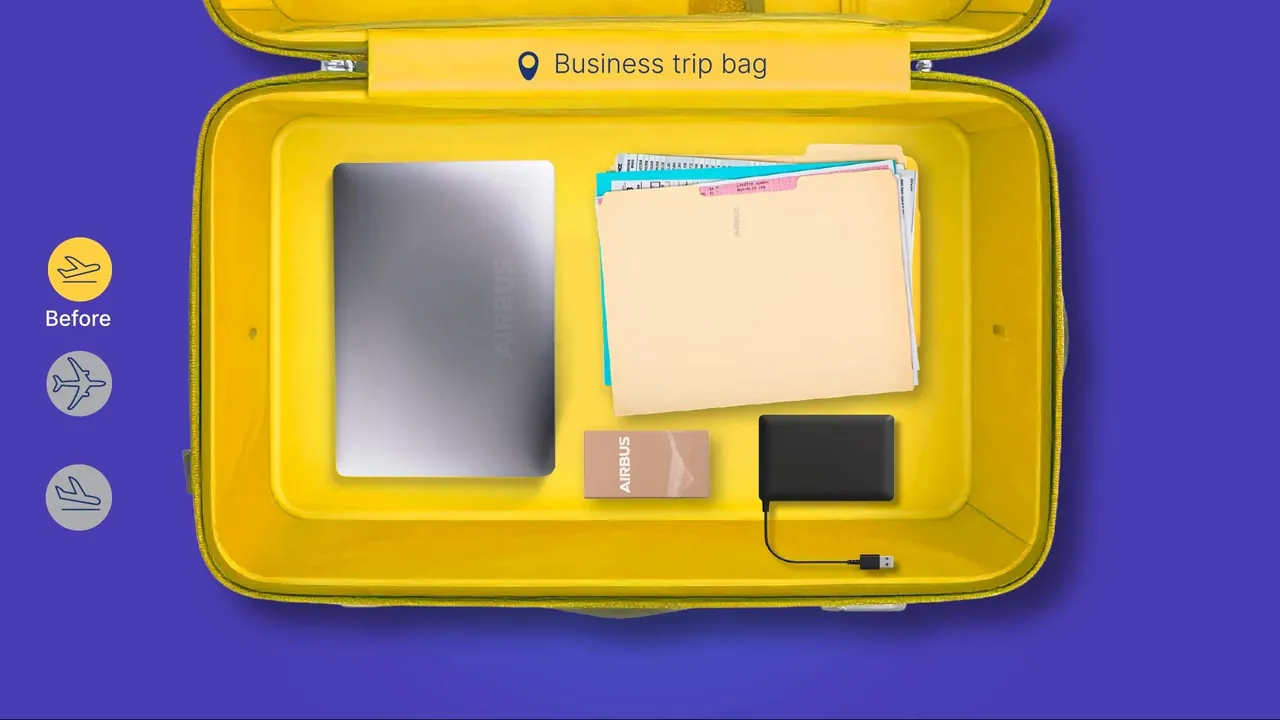
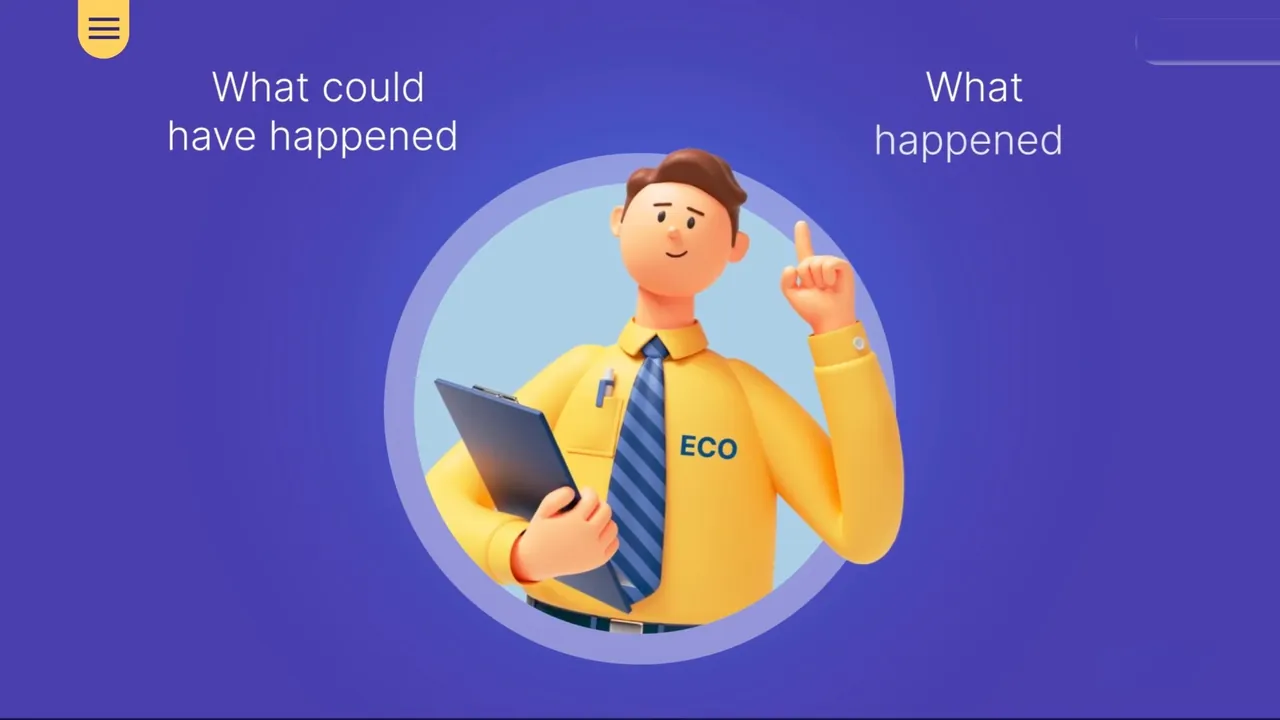
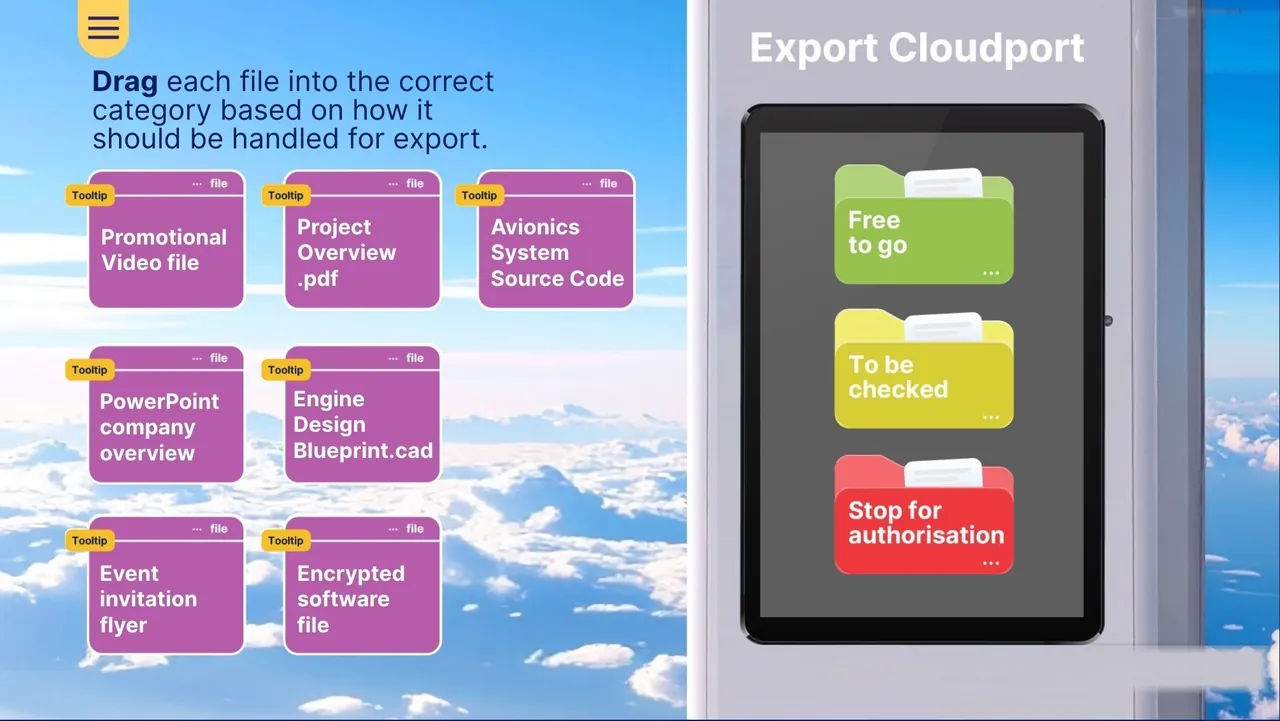
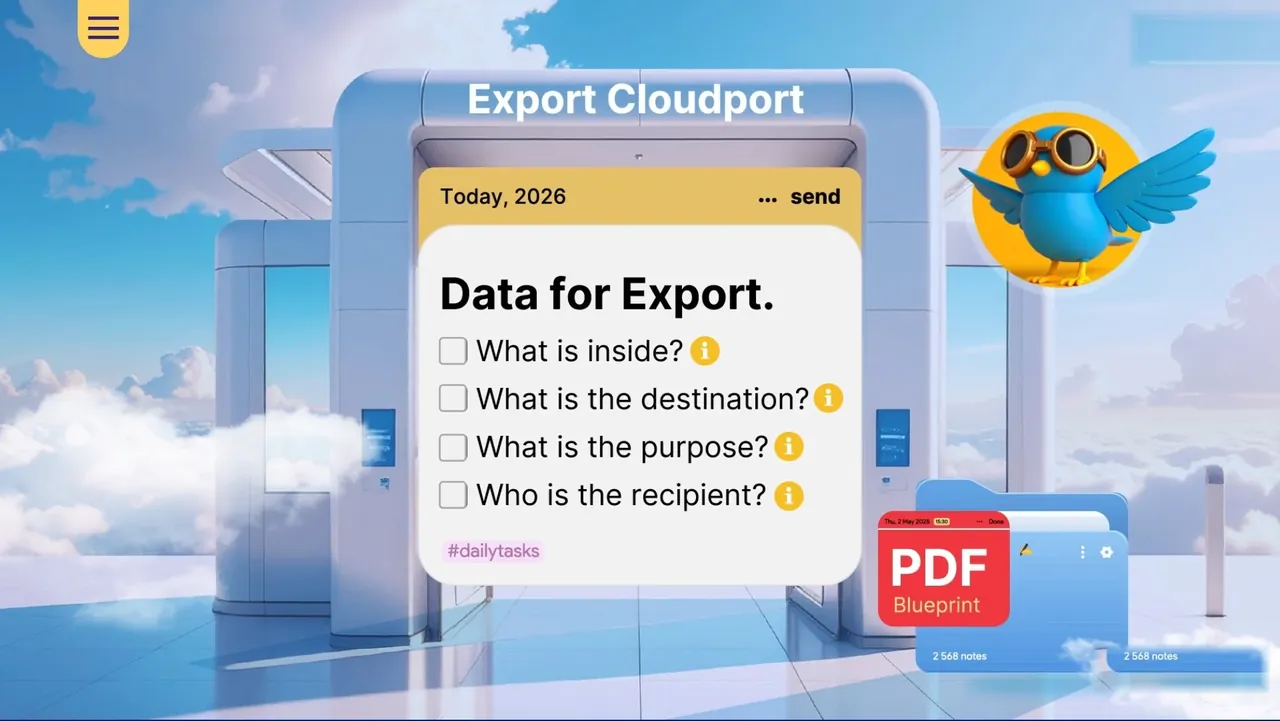
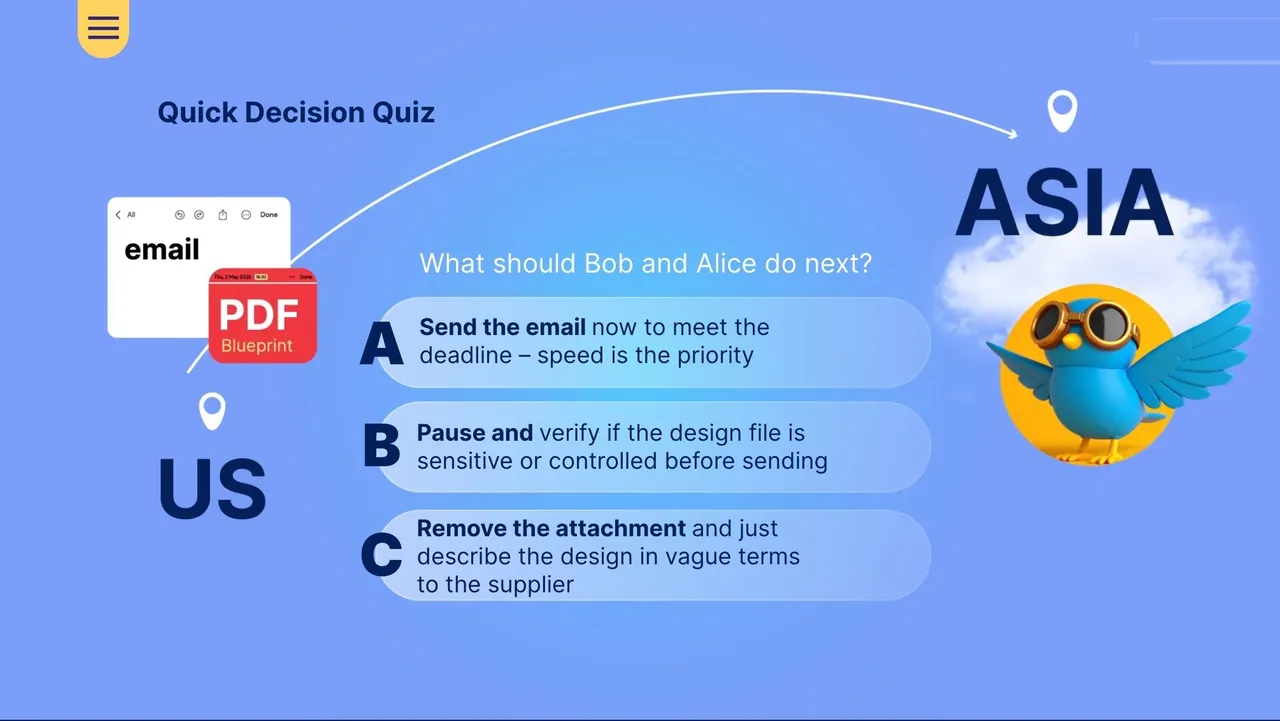
In Essentials to Travel, John comes back from a trip and tells his team leader, Lisa, that his laptop carried design files nobody cleared. Nobody panics. Lisa opens the travel checklist, they work out where it went wrong, and the course rewinds the trip so the learner can make John’s decisions again, correctly. In Intangible Management, Bob is about to forward engine drawings from a partner to a supplier in Asia, and Alice stops him. Then the course sends the file to “Cloudport”: an email attachment is treated as a suitcase at customs, checked with four questions. What’s inside? Where is it going? What is it for? Who will receive it? People then sort a set of files by how they should be handled.
It worked because the mistakes were ones good colleagues could make, the fix was calm and practical, and the right behaviour, stopping and asking, was the hero of both stories.