
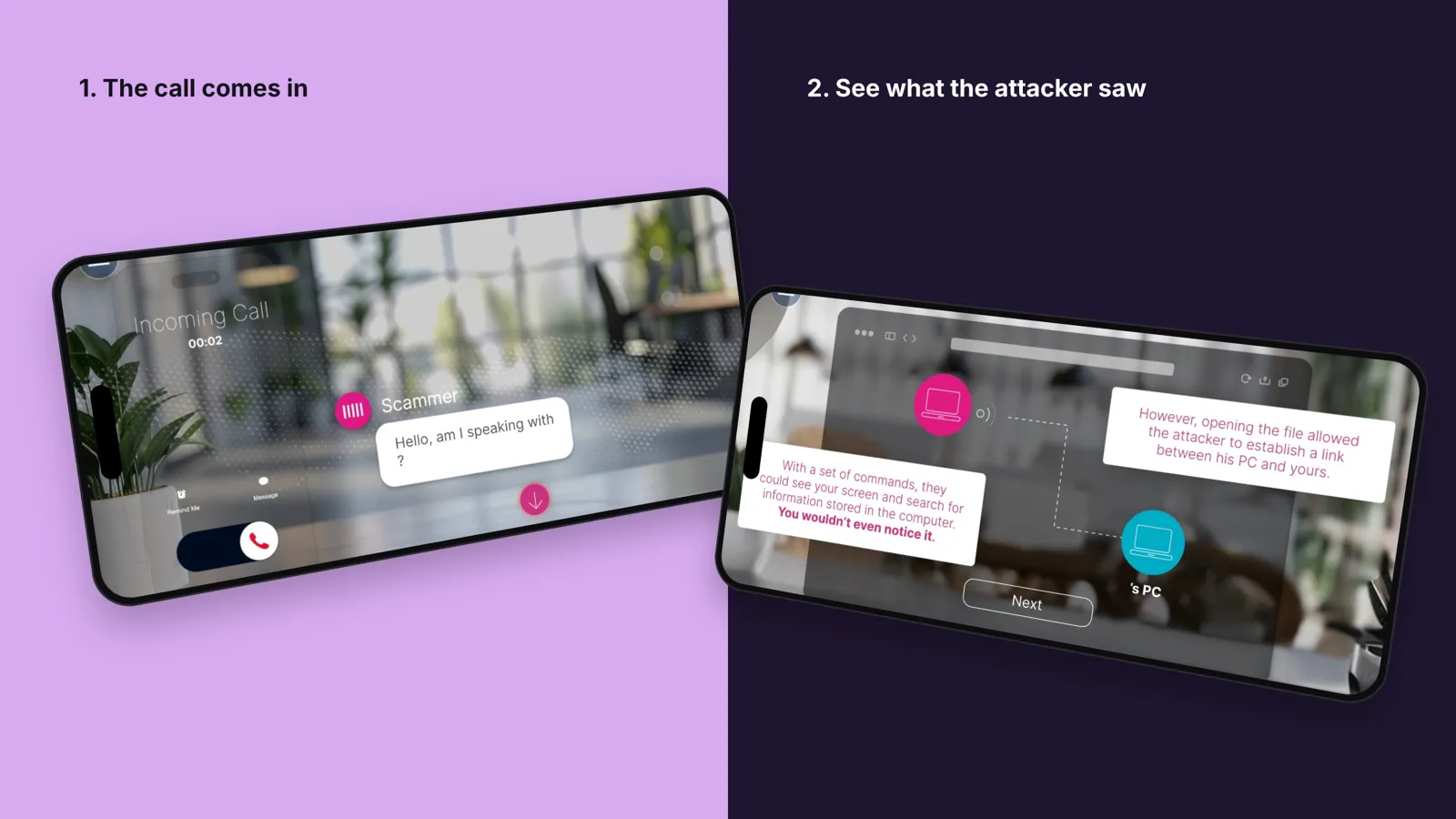
Phishing.
A phishing course that attacks you first, using what you told it about yourself.
People learn the procedure from a clean example. Then reality brings an exception. We build scenario-based learning around the grey areas, where most of the risk lives.
A free first call. You bring the subject, we bring how we’d approach it.
People have met the hard cases before they meet them for real. They understand the reasoning behind the rule, so they can apply it to situations the training never showed them.
Procedures are taught with clean examples. Real work brings exceptions. Scenario-based learning puts people in the grey areas before reality does.
The best scenarios come from things that actually happened: incidents, near misses, the questions your experts get asked. Our electrical installation course taught each rule from a real incident file.
A scenario where the right answer is obvious teaches nothing. Each one needs a choice a reasonable person could get wrong.
Show what happens after each choice, in the learner’s world. Our export control course replays two near misses, then shows them done the right way.
Scenarios work best when they feel like the learner’s own job. Our phishing course attacks the learner first, using what they told it about themselves.
A few strong scenarios beat a long branching maze. One key decision per scenario, with feedback that explains why.
A phishing course that attacks you first, using what you told it about yourself.
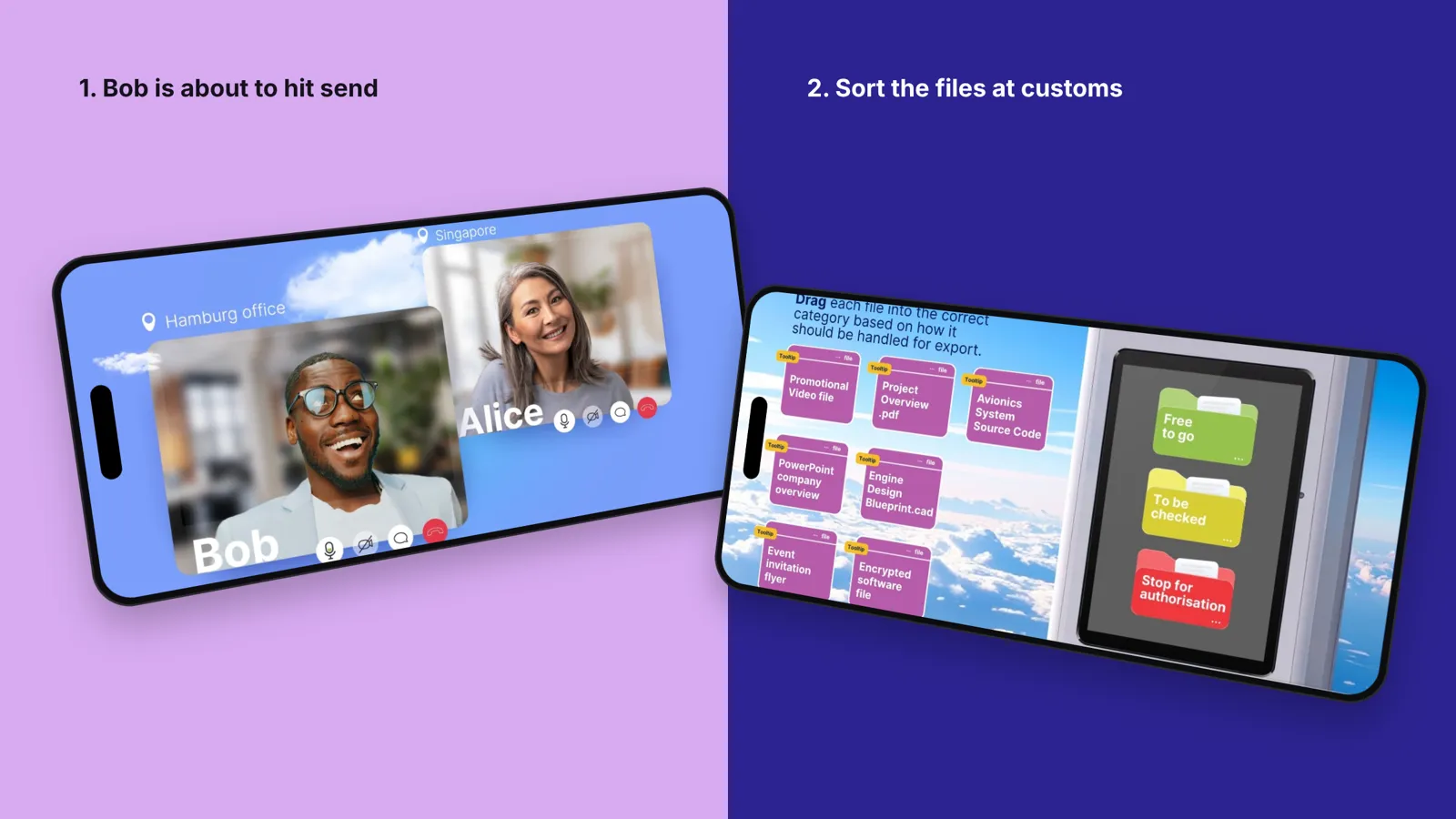
Two near misses, travelling with data and sharing it, replayed the right way.

Mandatory training for 150,000 people, rebuilt as an immersive story.
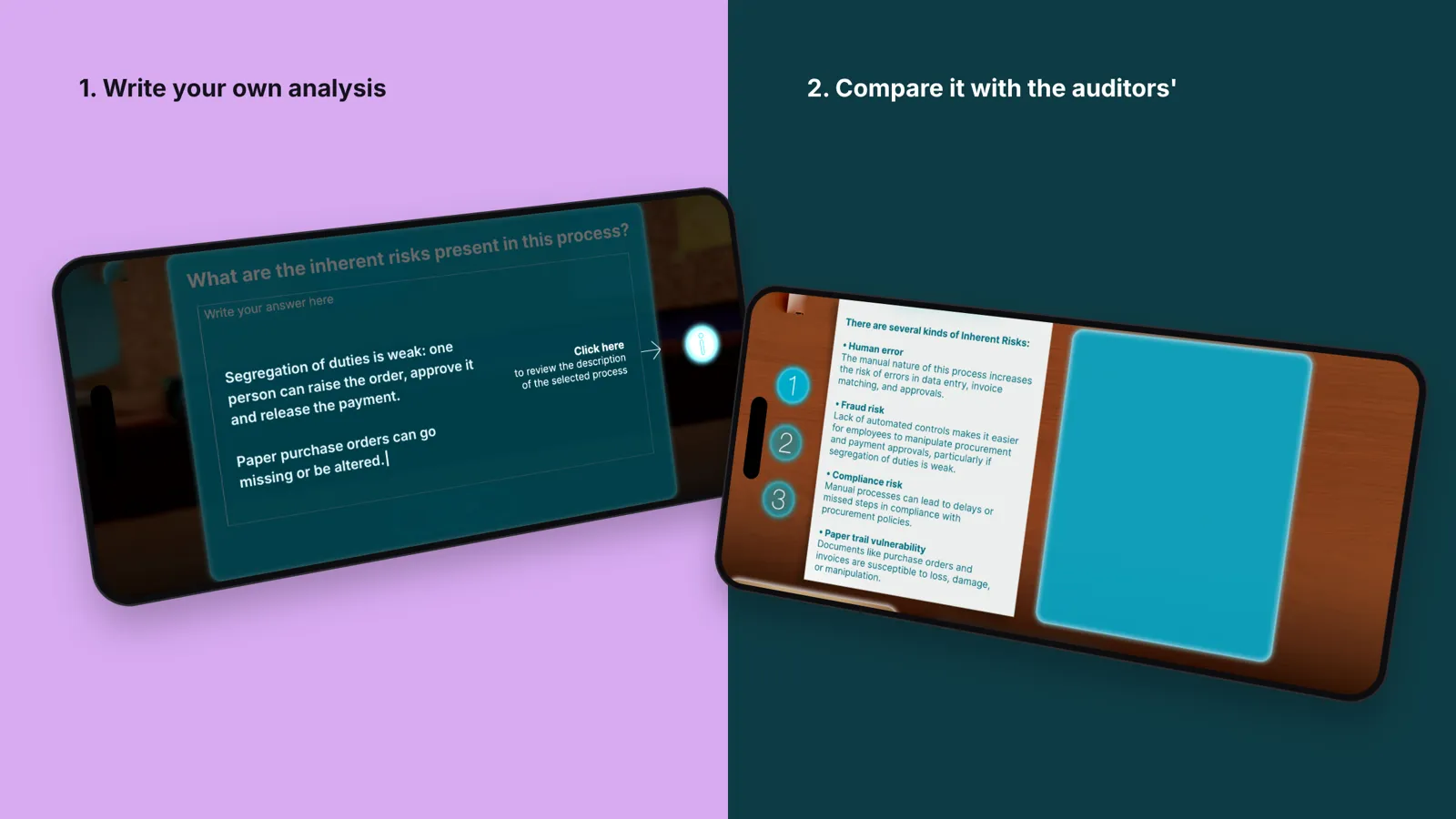
An audit method nobody applied correctly. One module became three.
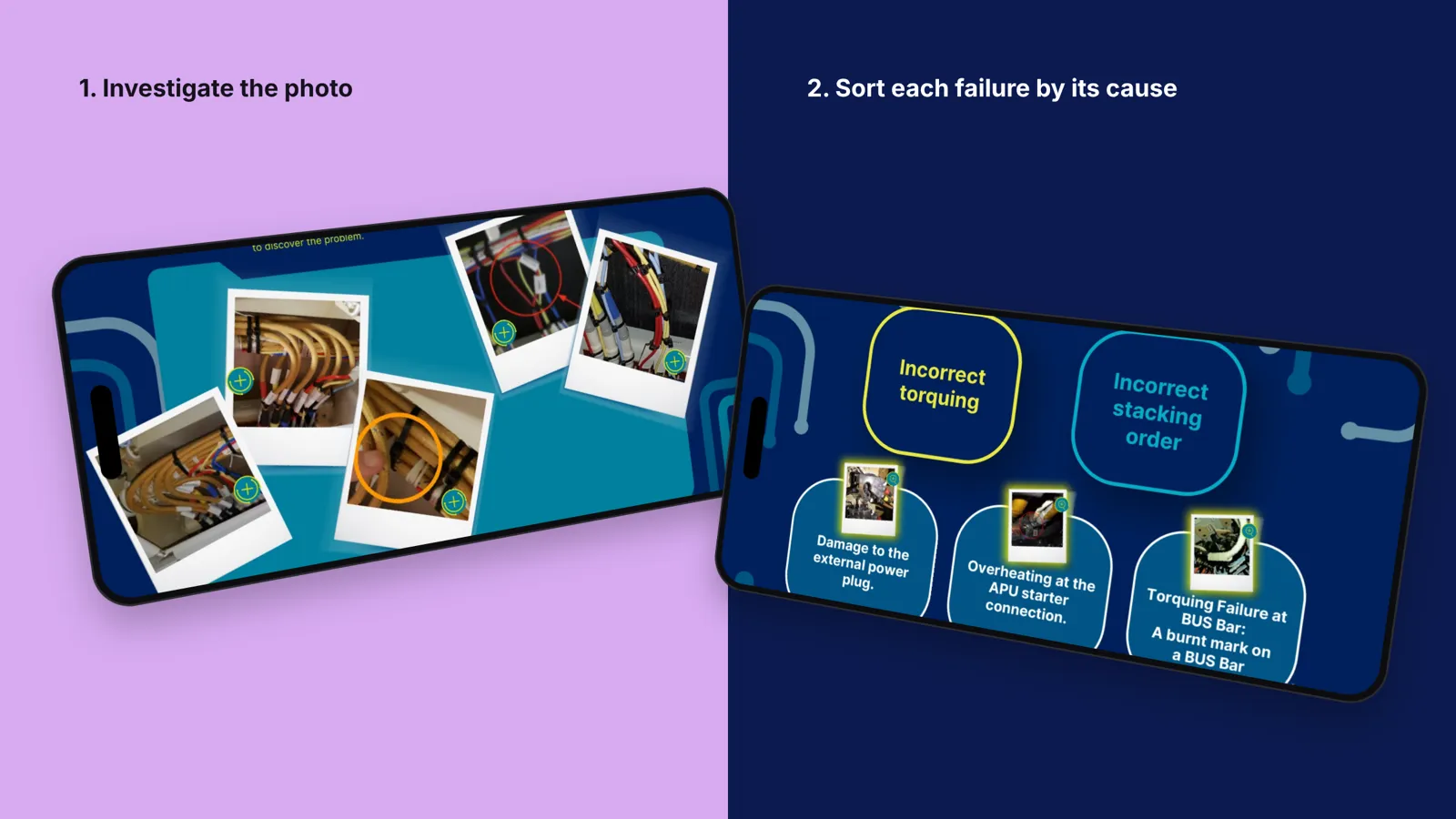
Five electrical installation rules, each taught from a real incident file.
Tell us about it. In one conversation, we’ll tell you what we’d do and whether we’re the right people. No fee, no obligation.
Test us on one subject