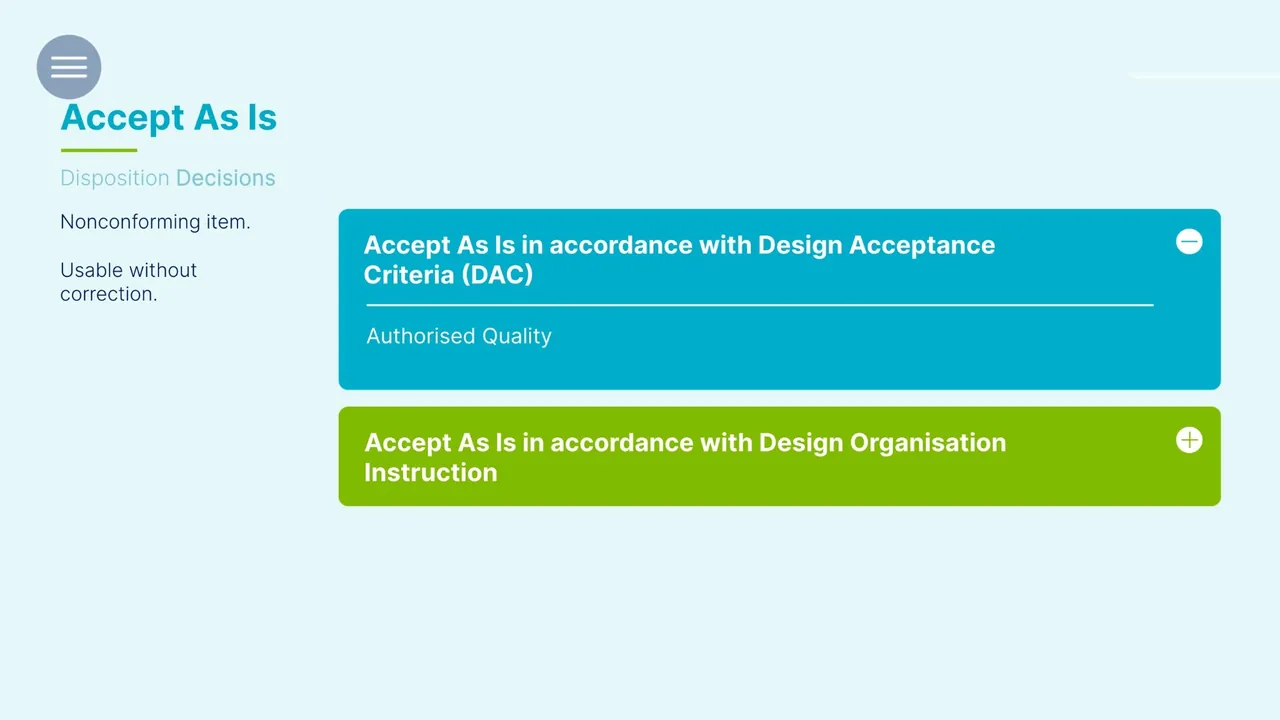
Every nonconforming part ends in one of five decisions.
A part arrives and doesn’t match the drawing. Accept it, rework it, repair it, reject it or scrap it. Behind each answer is a nonconformance management method with rules on who decides, on what basis, and what happens next, shared by the client and its suppliers.
The challengeNonconforming parts, and the rules behind each decision
The client introduced a new method for managing nonconforming items between itself and its suppliers, replacing an older one. It covers authority requirements, the manufacturing nonconformance process, design acceptance criteria, the difference between significant and insignificant nonconformities, and separate rules before and after delivery. It had to be understood the same way by quality and engineering teams inside the company and by suppliers outside it. The method was complete and well referenced. As a document, it was also long, dense and easy to misapply.

What we deliveredNonconformity management training for a client and its suppliers
- 1An Alignment Brief with the client’s quality and engineering experts: who uses the method on each side, which decisions cause the most confusion, and what changed from the old method.
- 2A Story Blueprint built on one idea: teach the decisions, and the method follows.
- 3A 45-minute nonconformance management training course led by short animated videos, one per screen, moving from authority requirements to the process before and after delivery.
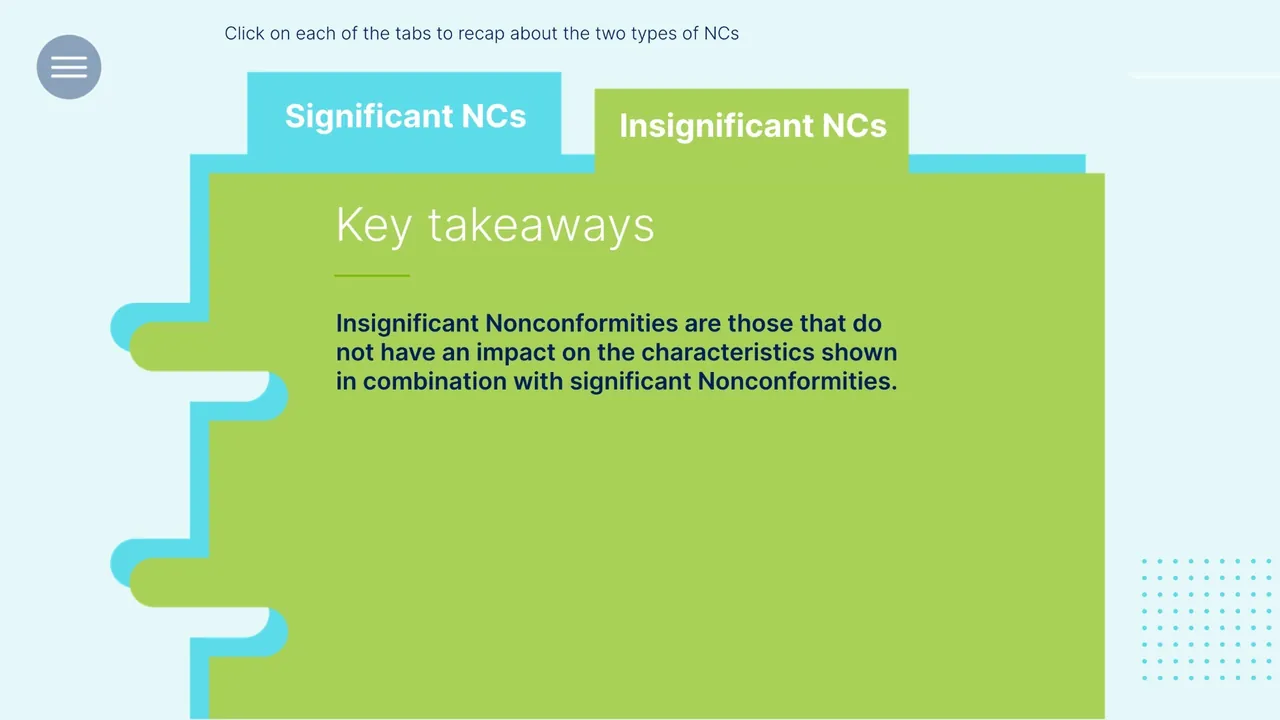
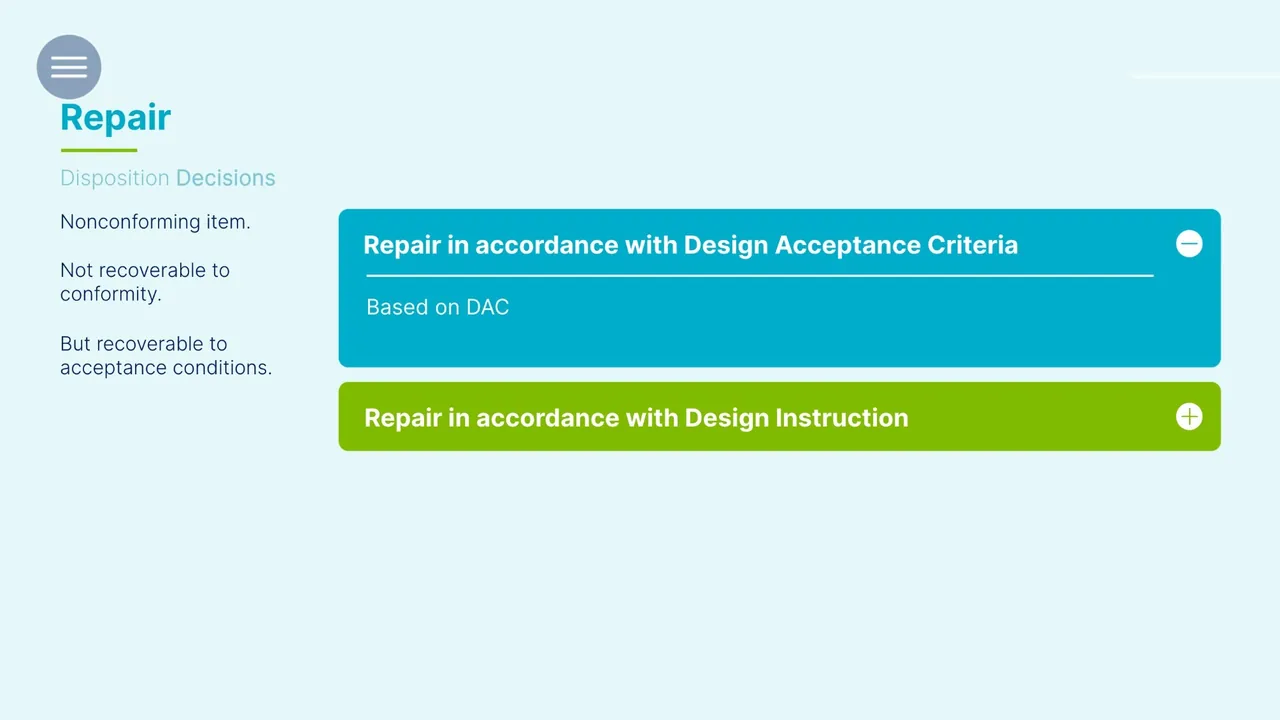
- 4Interactive screens to explore: the five disposition decisions, the principles for managing nonconformities, the key principles of design acceptance criteria, flowcharts built step by step, key takeaways to download and a final quiz.
The idea, and why it workedTeach the decisions, and the method follows
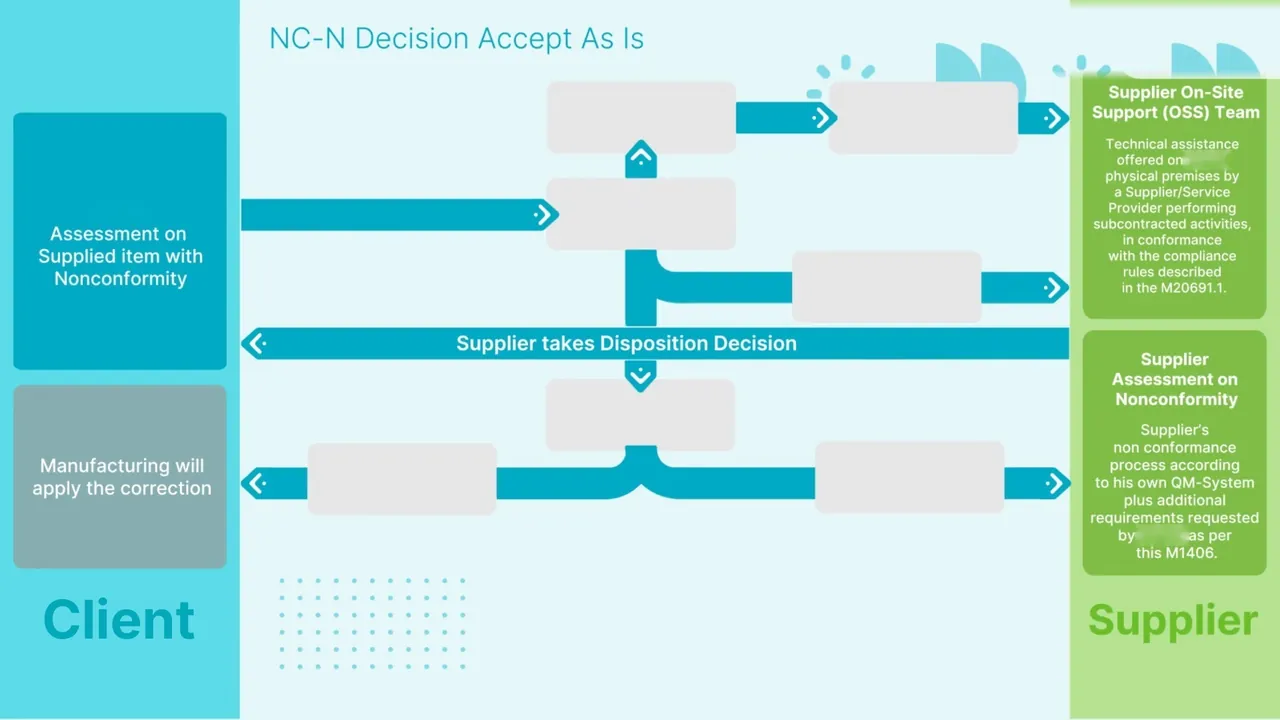
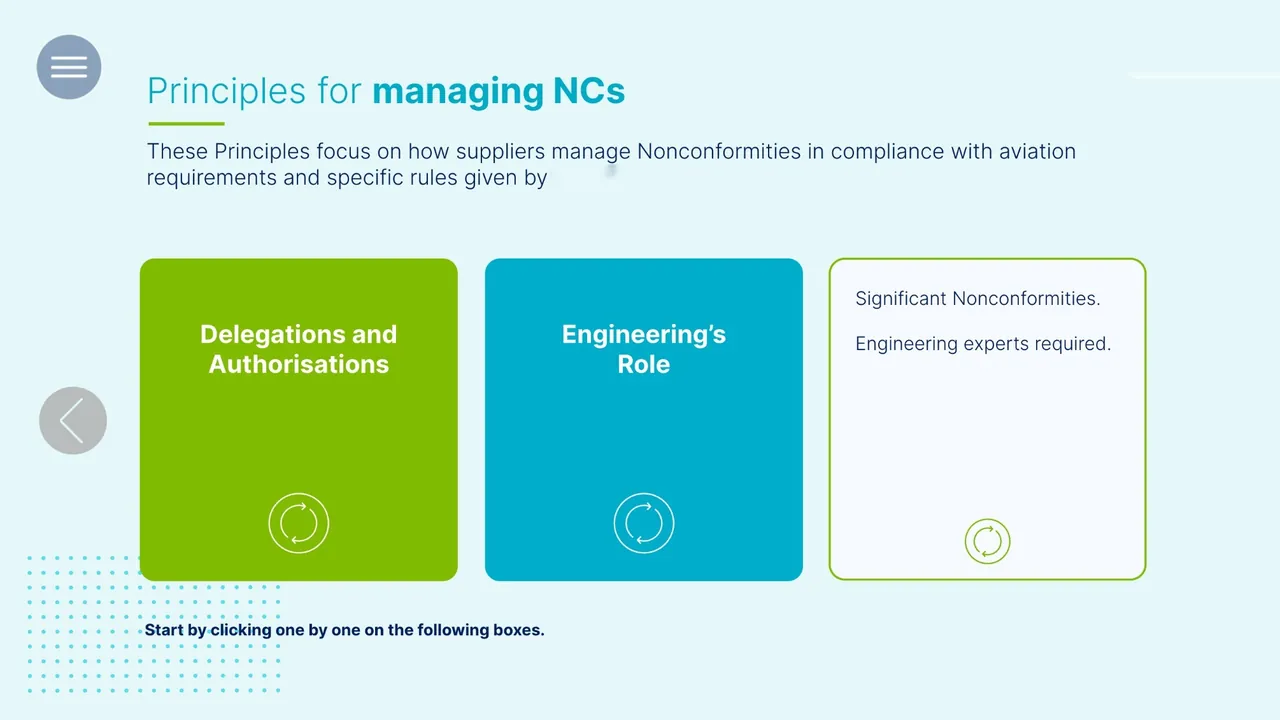
At the heart of the course is a single screen with five buttons: accept as is, rework, repair, reject, scrap. Each opens what that decision means, when it applies and who has the authority to take it, from design acceptance criteria to an engineering assessment. Around it, the course explains the principles that frame those decisions: the supplier’s responsibility, delegations and authorisations, notifications of escape, and when a nonconformity counts as significant. The two big flowcharts, before and after delivery, are built up on screen one step at a time, so nobody faces the whole map at once.
It worked because people don’t use a method by reading it. They use it when a part is on the bench and a decision has to be made. Organising the course around those decisions gave everyone, inside the company and at the suppliers, the same starting point.