It started with a faint burning smell.
Electrical damage on an aircraft rarely starts with a big mistake. It starts with a cable a few millimetres too close, a clamp left open, a nut not torqued. Small things, invisible once the panel closes, and the reason aircraft wiring safety training matters.
The challengeWiring rules people had signed for, and still broke
The client’s production and quality teams install and inspect electrical harnesses every day, and the rules for doing it right already existed: clearance, routing, tying, terminal blocks, connections. People had read them and signed for them. Yet the same kinds of incidents kept coming back from production and from aircraft in service. The client didn’t need new rules. It needed blue-collar workers and line-side inspectors to apply five golden rules every time, including where nobody would see the result.
What we deliveredAircraft wiring training built on real incident files
- 1An Alignment Brief with the client’s electrical and quality experts: which incidents mattered most, which rule each one broke, and what people on the line actually look at.
- 2A Story Blueprint built on one idea: every rule was written after something went wrong, so start with what went wrong.
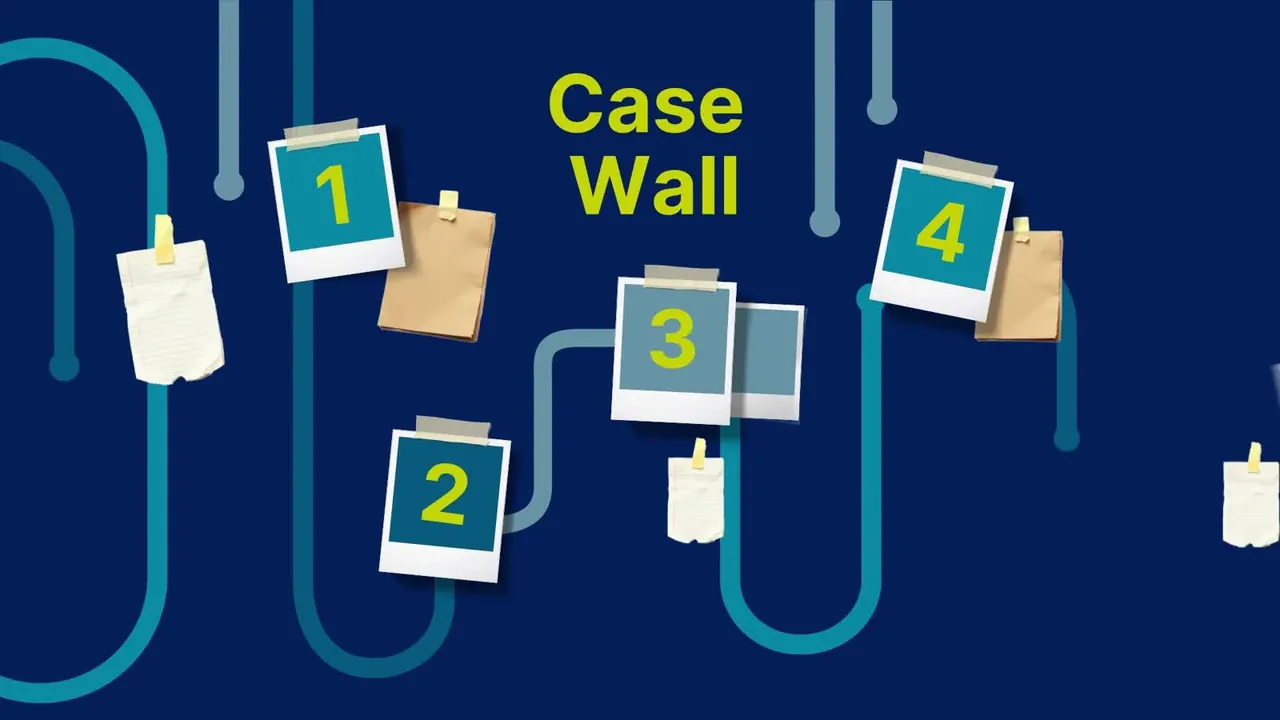
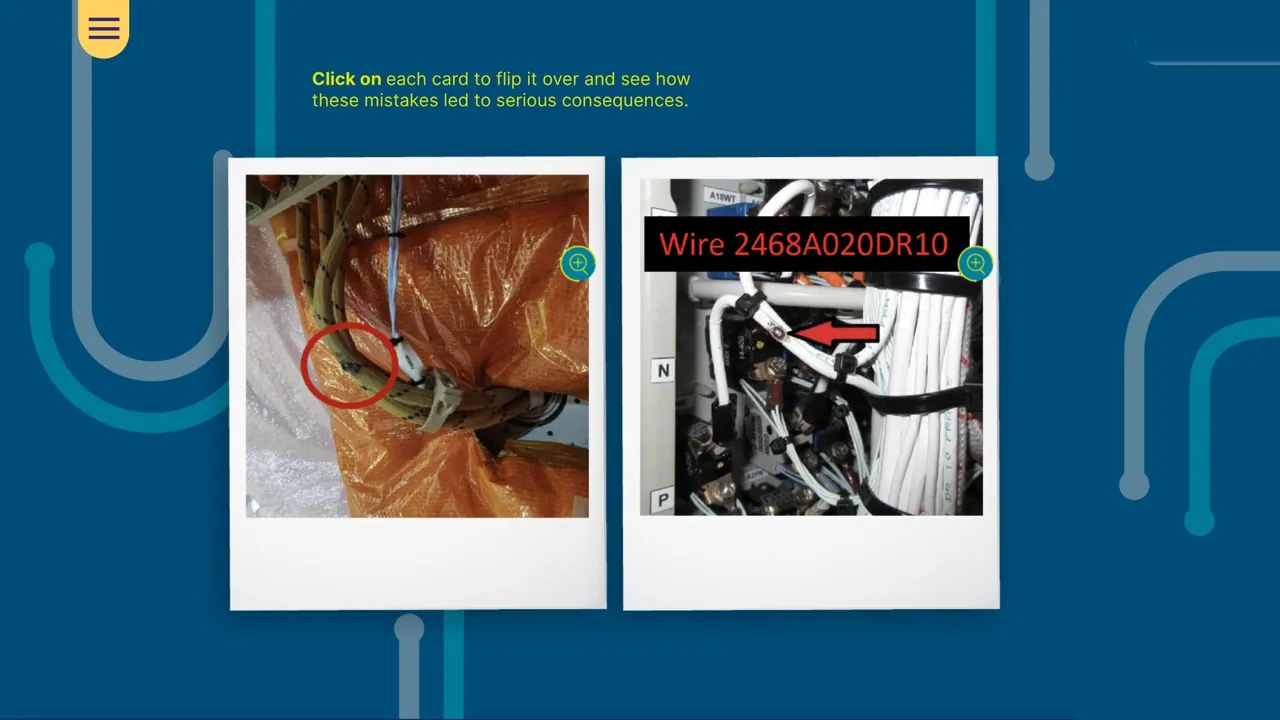
- 3A 20-minute aircraft wiring safety training course presented by Max, an expert from the line, built around a wall of real case files: photos, investigation notes and consequences.
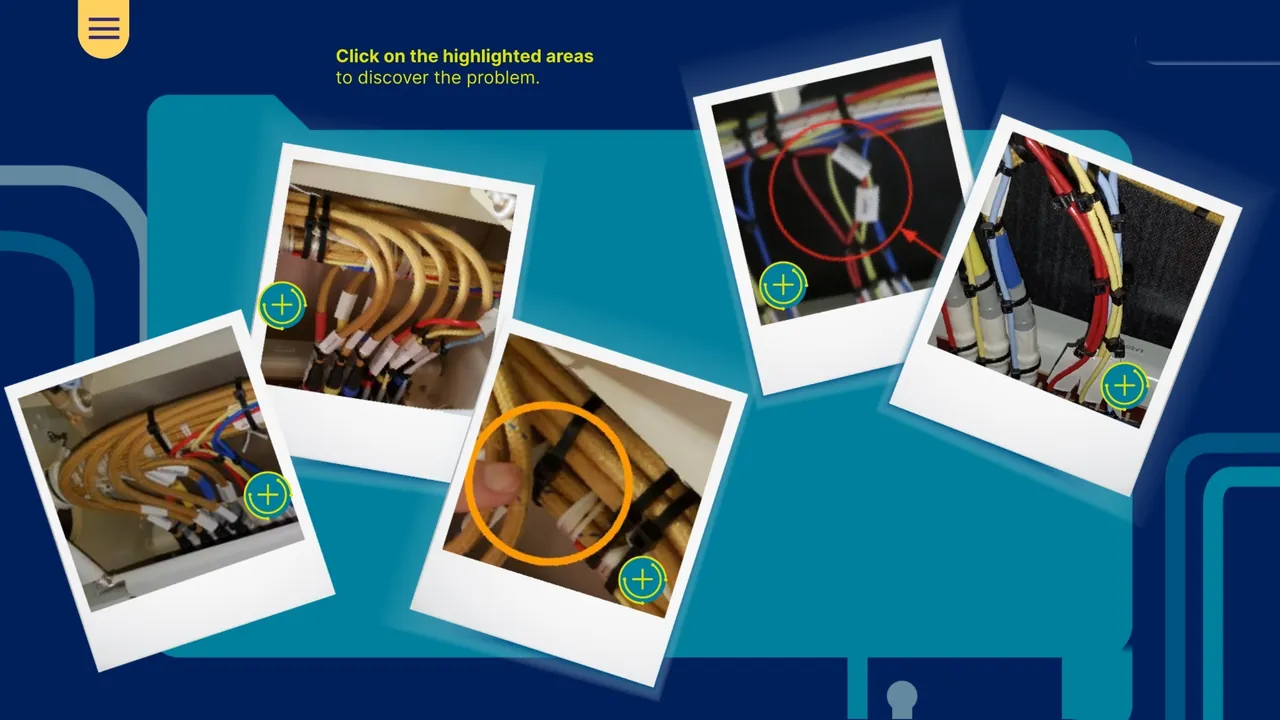
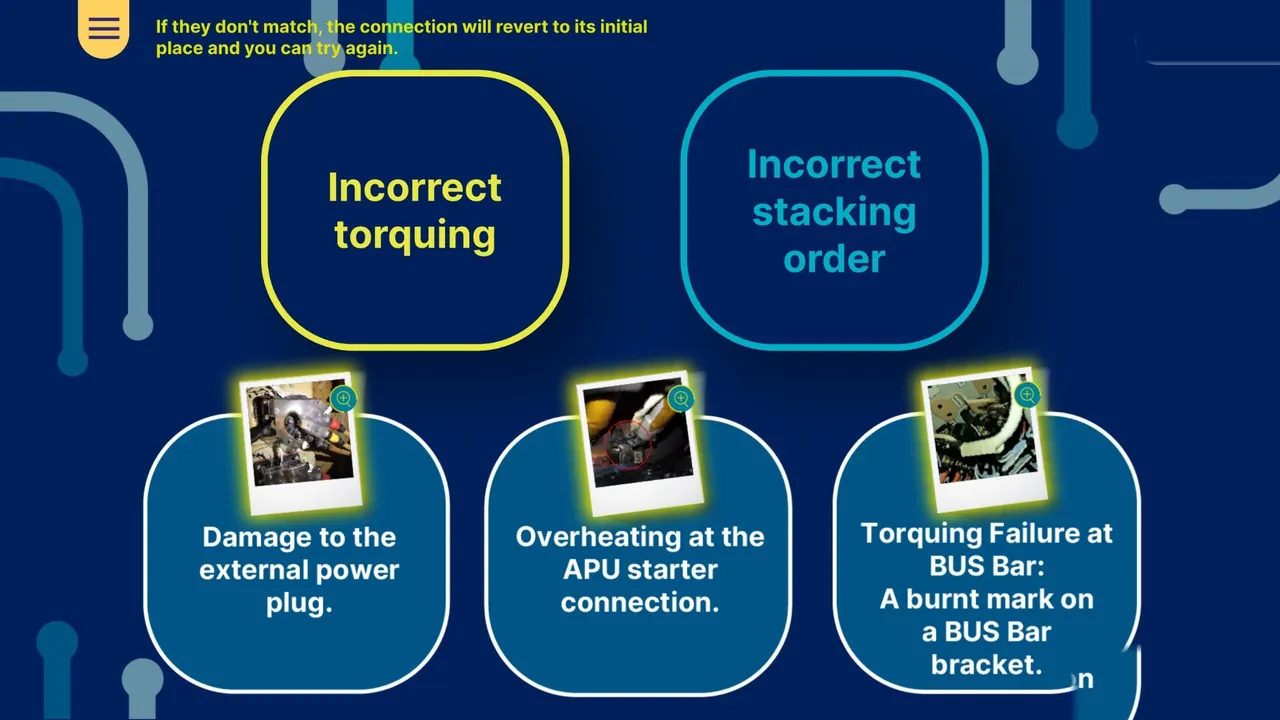
- 4Practice on the real thing: flip cards on incidents, click-to-reveal investigations on photos, a drag-and-drop that sorts faulty connections by cause, and a true-or-false quiz on real cases.
The idea, and why it workedEvery rule starts with what went wrong
The course opens on a faint burning smell mid-flight, and on Max standing in front of a case wall. Each of the five rules starts there, with an incident: a harness that lost its clearance to a hydraulic pipe, a clamp left open, a cable chafing behind a panel nobody would open again. Only after the case does Max explain the rule that would have prevented it. Then the learner investigates: clicks the highlighted areas of a photo, finds the fault, decides which error caused it.
It worked because every rule arrived with a reason people had just seen with their own eyes. A rule people understand the reason for is a rule they apply when nobody is checking.