Training for the day you hope never comes.
A crisis team is made of people who almost never do the job. When they’re called in, there’s no time to read the method. Crisis management training has to make each of them know their role, and only their role, very well.
The challengeCrisis teams who almost never do the job
The client’s crisis management method was already in place, with Crisis Management Teams activated whenever an event hits the company. Inside each team, some roles are highly specific and rarely exercised: the log keepers who record everything, the people who handle the victim list, the business specialists who advise, and the representatives of the businesses the crisis affects. Each role has its own deliverables, tools and confidentiality rules, and the people who hold them can go years between activations. They needed to know their role precisely, quickly, and in a way they could refresh the moment they were called.
What we deliveredCrisis management training, one module per role
- 1An Alignment Brief with the client’s crisis management office: which roles needed their own training, what each one produces, and which mistakes cost the most during a response.
- 2A Story Blueprint built on one idea: train the role, not the crisis. Every module answers the same four questions: what is my mission, when do I act, what do I produce, and who do I give it to.
- 3Three 15-minute crisis management training modules with audio, one per role: Log Keeper Activities in Depth, Victim List Management, and the Impacted Business Representative and Business Specialist roles.
- 4Practice and tools to keep: card flips on what each deliverable must contain, a spot-the-difference between two often-confused roles, knowledge checks and a final quiz, key takeaways to download, and pointers to the latest templates.
The idea, and why it workedTrain the role, not the crisis
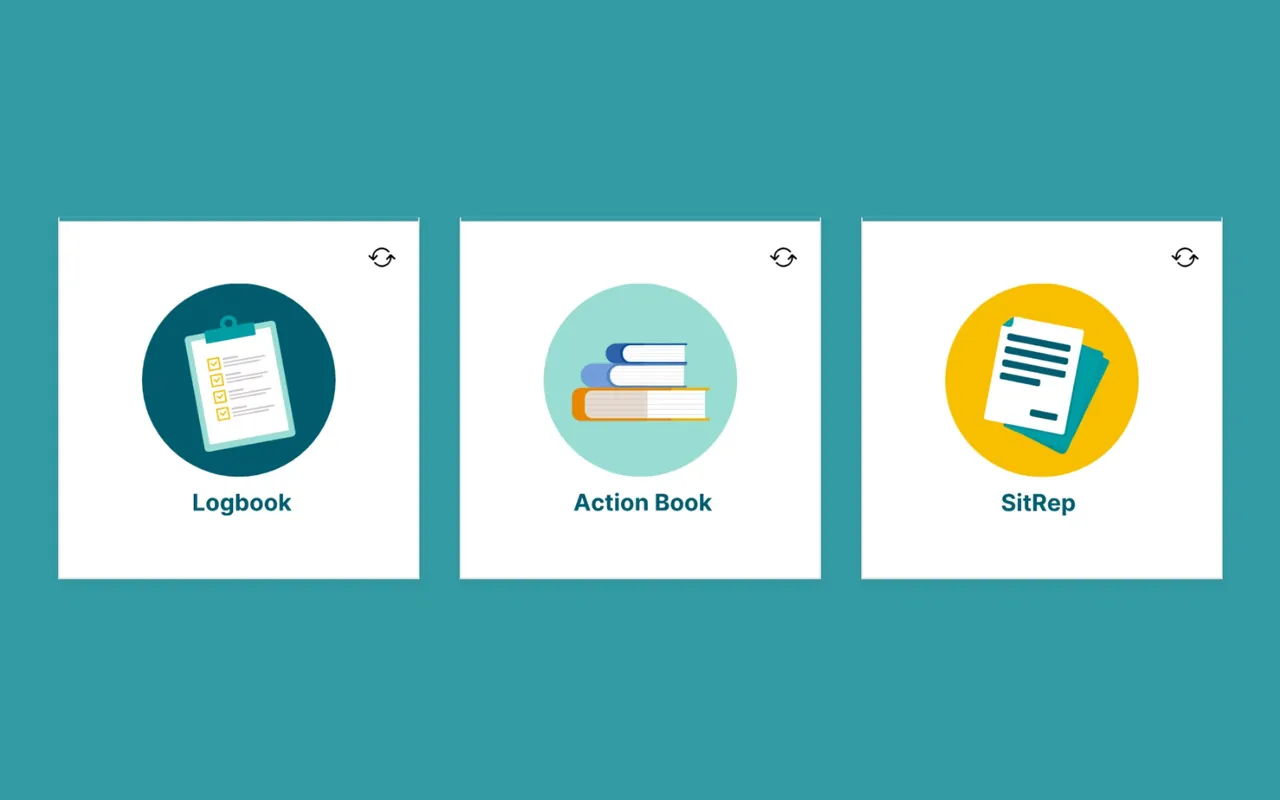
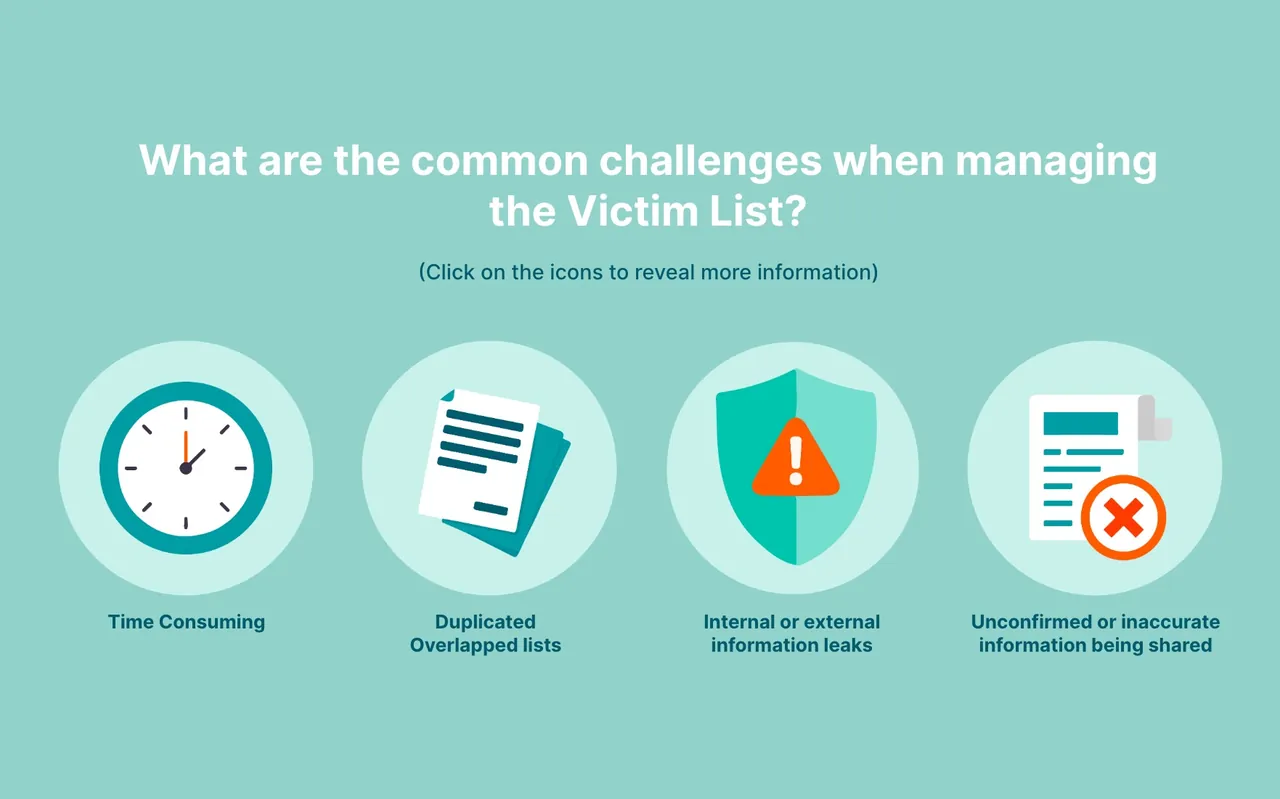
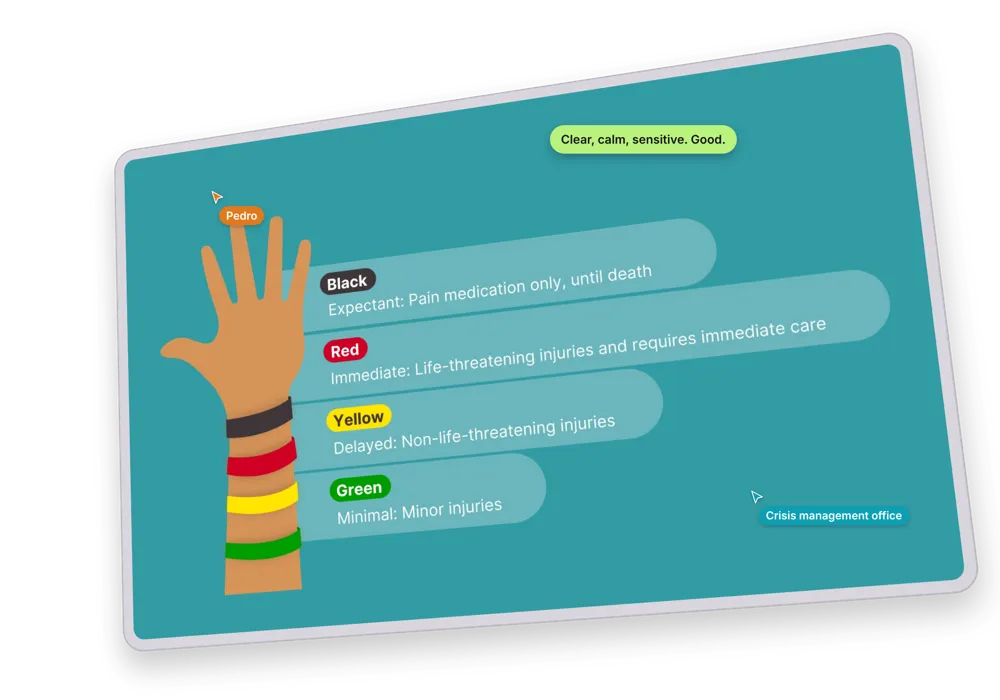
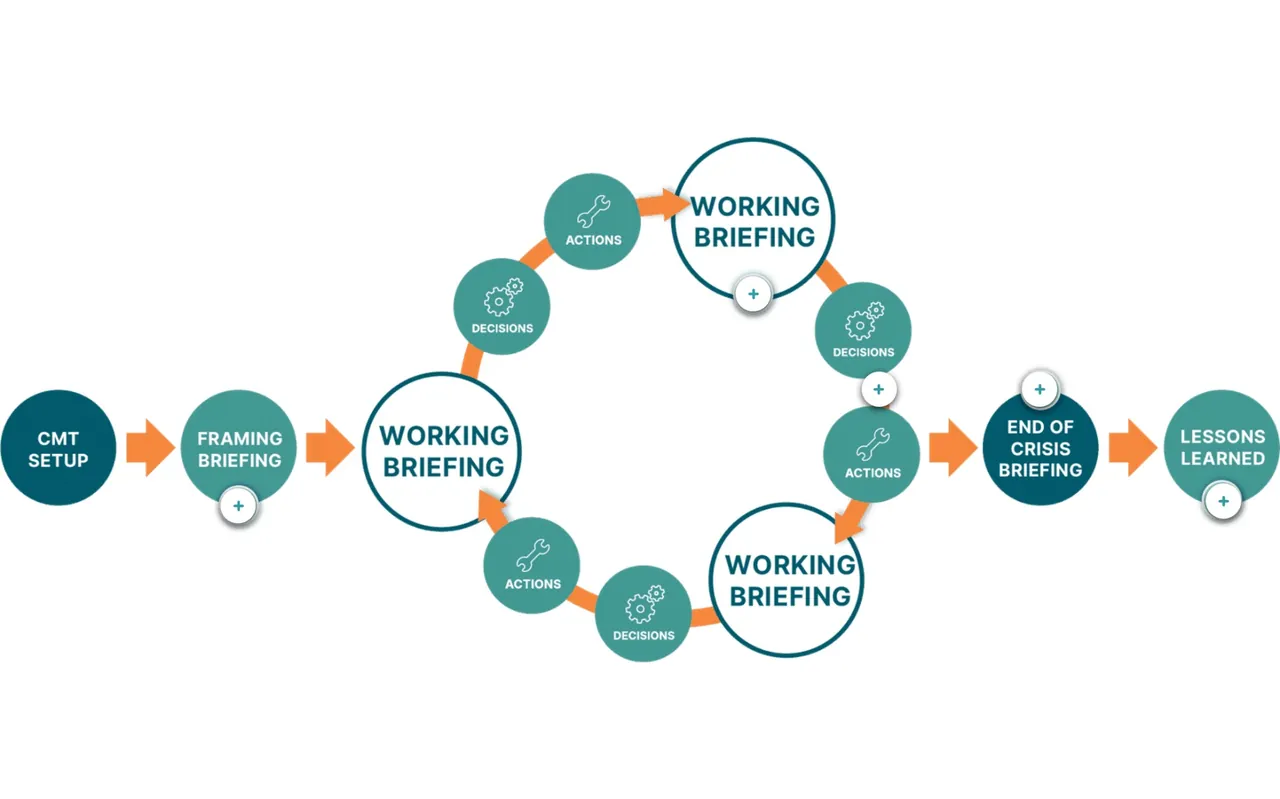
Each module stays inside one role and follows it through the crisis lifecycle, from the framing briefing to the end of the crisis. The log keeper learns what goes into the logbook, the action book and the situation report, how to time-stamp it, and the golden rules of keeping a record others will rely on. The victim list module covers one of the most sensitive tasks in any response: who is on the list, who manages it, who can see it, how first responders classify victims with the METTAG triage colours, and how the company, the authorities and the victims’ side work together. The business roles module settles a confusion that slows teams down: business specialists are always activated with the team and advise it, while impacted business representatives are called in only when their function is hit, to report the impact.
It worked because under pressure people don’t rise to the occasion, they fall back on what they know. A short, precise module per role gives each person one thing to know very well, and something they can revisit in fifteen minutes on the day they’re called.