A course on ecodesign that follows its own advice.
Ecodesign asks engineers to think about a product’s whole life, from raw materials to end of life. Good ecodesign training goes from climate science to life cycle assessment without losing anyone on the way.
The challengeFrom climate science to life cycle assessment
The client wanted its engineers, designers and project teams to understand ecodesign and life cycle thinking, and to start applying them in real projects. The subject is wide and technical: the climate and planetary context, why it matters to the business, the principles of ecodesign, how to choose an environmental assessment method, and how a full life cycle assessment works. It had to be rigorous enough for experts to trust and clear enough for people meeting it for the first time.
What we deliveredEcodesign training for engineers in four modules
- 1An Alignment Brief with the client’s ecodesign experts: who would apply it, what each module must make them able to do, and which ideas people most often get wrong.
- 2A Story Blueprint built on one idea: a path that goes from why, to what, to how, with a colour for each step.
- 3A four-module ecodesign training series, about three and a half hours in all: the context around ecodesign, the ecodesign approach, choosing assessment methods, and a deep dive into life cycle assessment. Two guides lead the way on video.
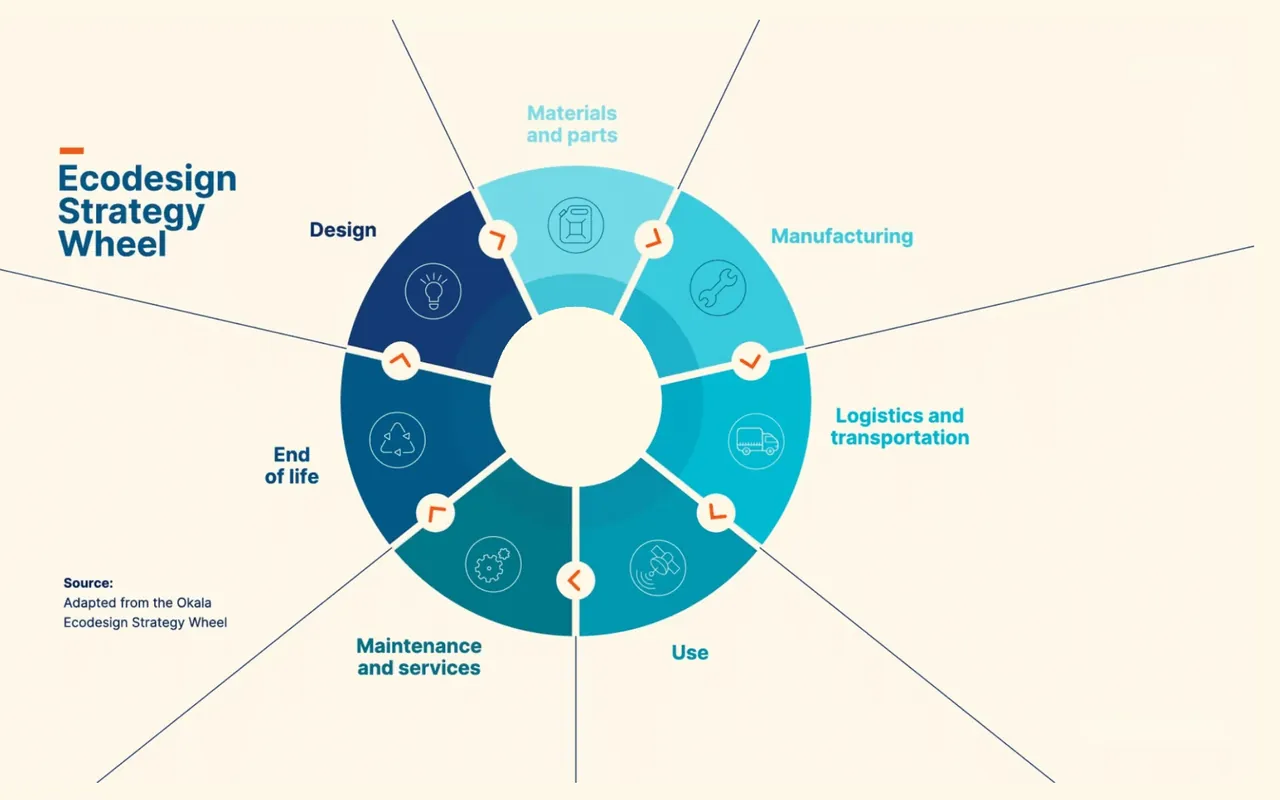
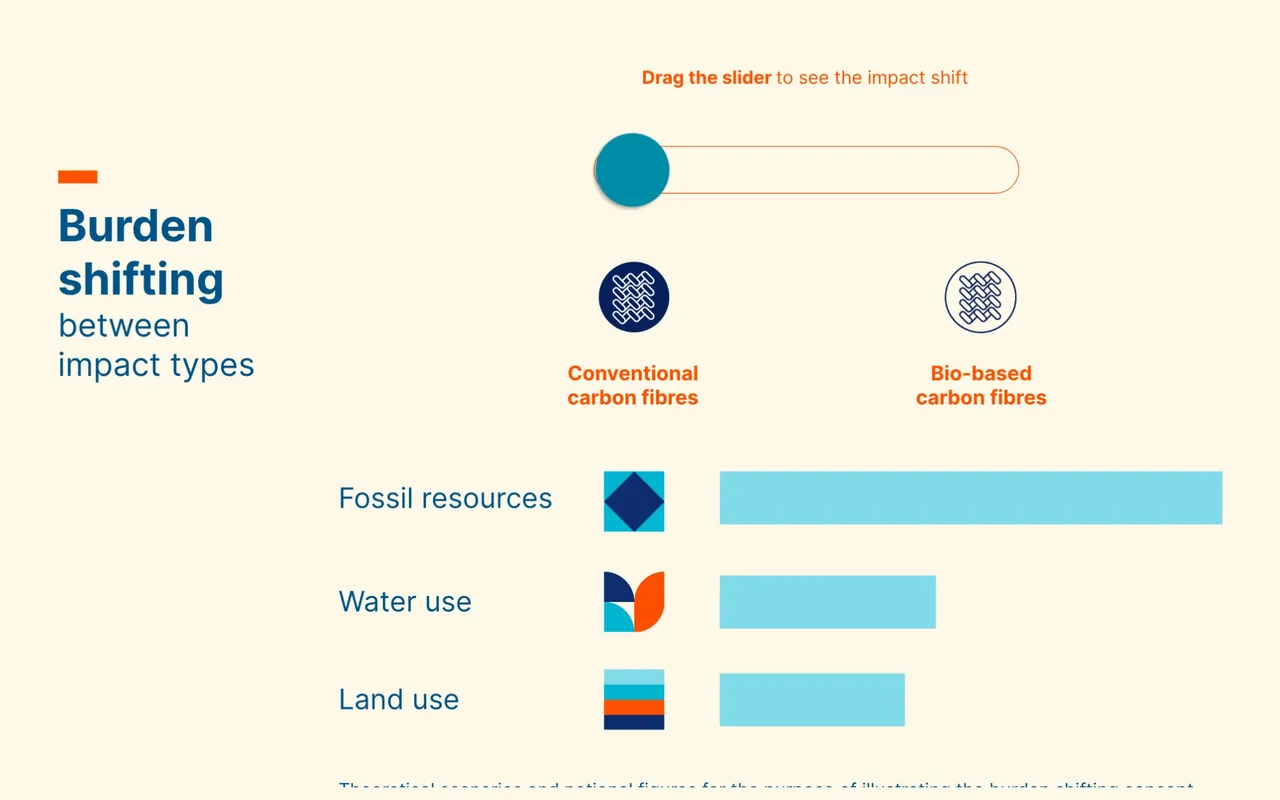
- 4Practice built on real cases: a slider that shows burden shifting, the ecodesign strategy wheel with real projects to sort, a method map to place on accuracy and resources, and a 3D-printed dice to assess from scratch. Glossaries and key takeaways to download for every module.
The idea, and why it workedPractise what you teach
Each module has its own colour and its own question, so people always know where they are on the path. The hardest ideas are learnt by doing. Burden shifting, where fixing one impact quietly makes another one worse, is a slider people move and watch. The strategy wheel is learnt stage by stage: at each stage, three real projects, two that belong there and one that doesn’t. And life cycle assessment is practised on the smallest possible product, a single 3D-printed dice, which still shows why data collection is the hard part.
The course also applied its own principle. Considering the environmental impact of AI, its use was kept to a minimum: only the guides’ avatars and voices were generated, while the script, design and content were made by the team of ecodesign experts, designers and writers. It worked because the content was rigorous, the practice was concrete, and the course practised what it taught.