Most of the impact is beyond our own walls.
A company can clean up its own sites and still miss most of its footprint. Most of what it makes, it buys, and the impact sits with thousands of suppliers. That is where sustainable procurement starts.
The challengeA supplier code of conduct, signed and filed
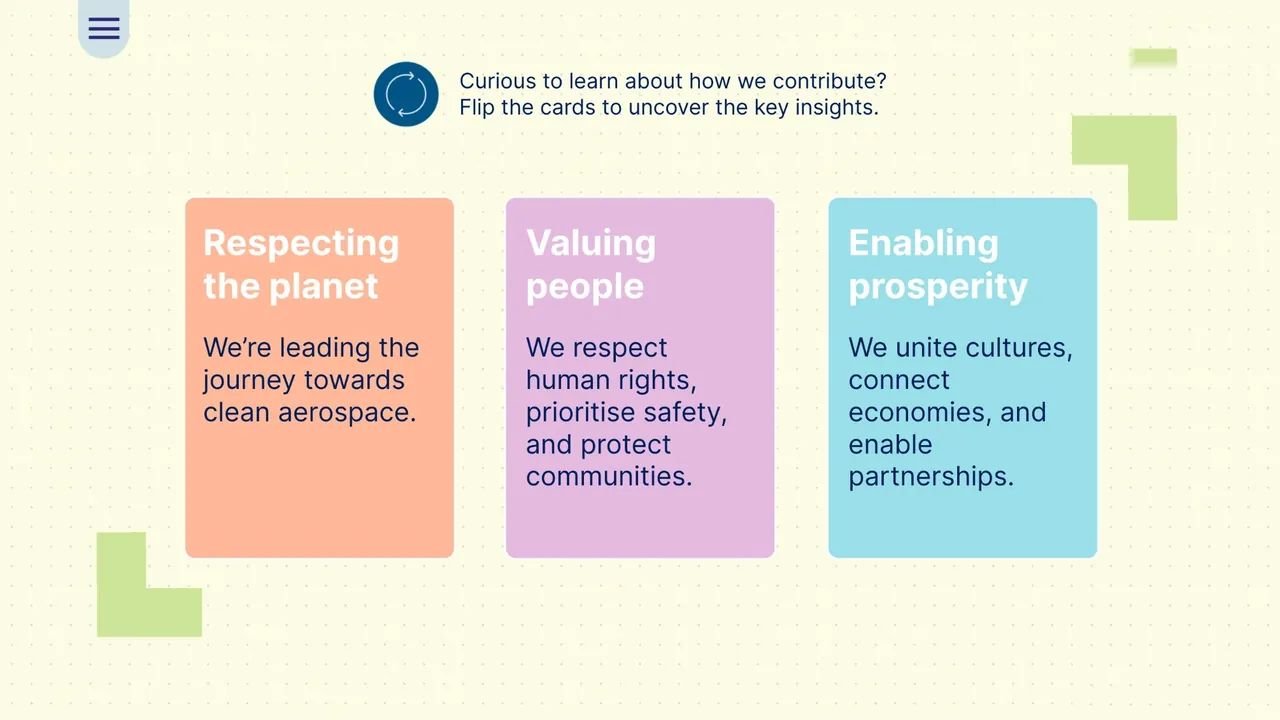
The client had a clear approach to sustainability in its supply chain: three pillars, a set of strategic priorities, a Supplier Code of Conduct and a process to assess and develop suppliers. The procurement teams who apply it needed to understand all of it and use it in every supplier relationship. There was also a common misconception to fix first: that supply chain sustainability is about the environment only, when it also covers human and labour rights, health and safety, and responsible sourcing.
What we deliveredSustainable procurement training for buyers
- 1An Alignment Brief with the client’s procurement sustainability team: what buyers must know, where the Code of Conduct is misread, and how the assessment tools fit together.
- 2A Story Blueprint built on one idea: the Code of Conduct is the start of a cycle, not a document to sign and file.
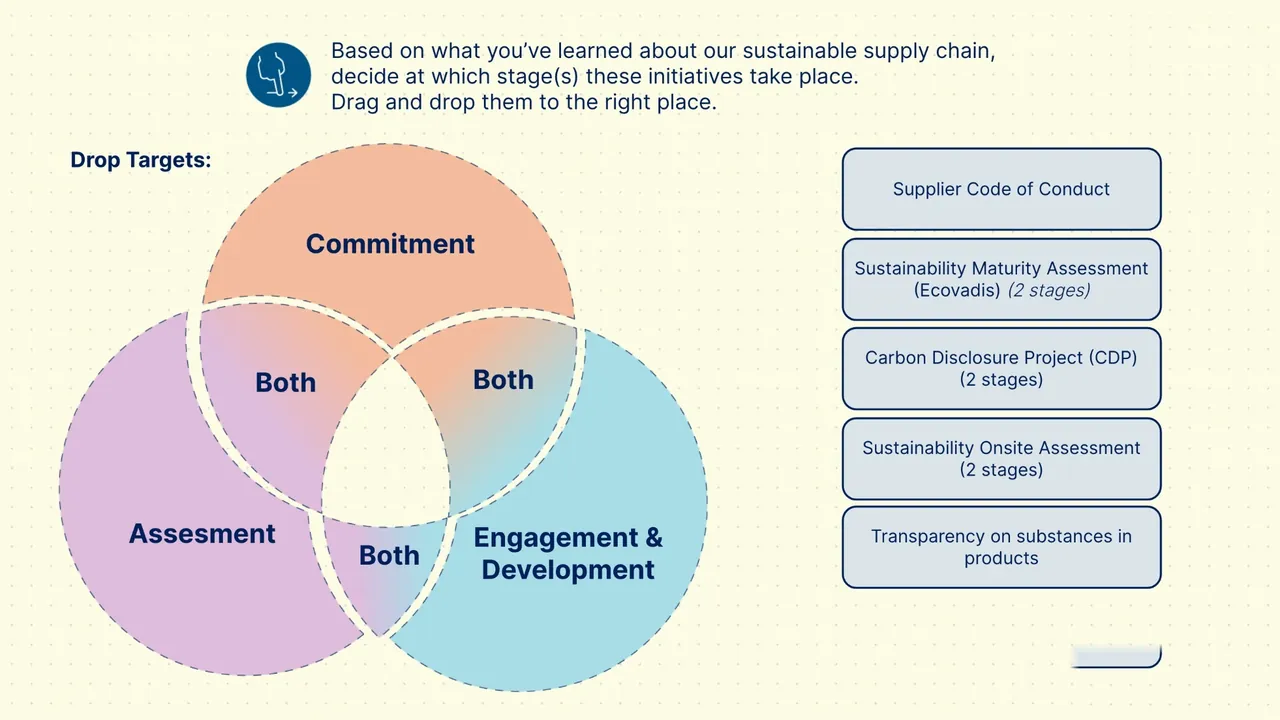
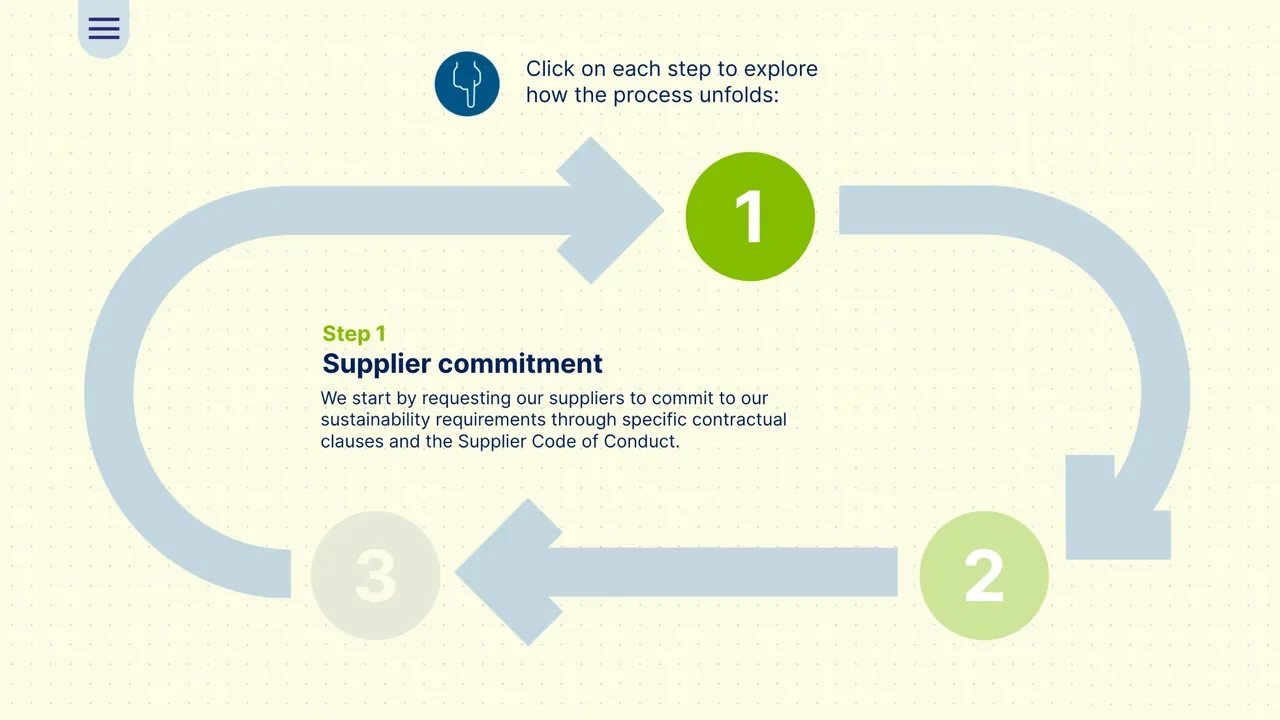
- 3A 30-minute sustainable procurement training course with a guide on video, built around three pillars and a three-step supplier cycle: commitment, assessment, engagement and development.
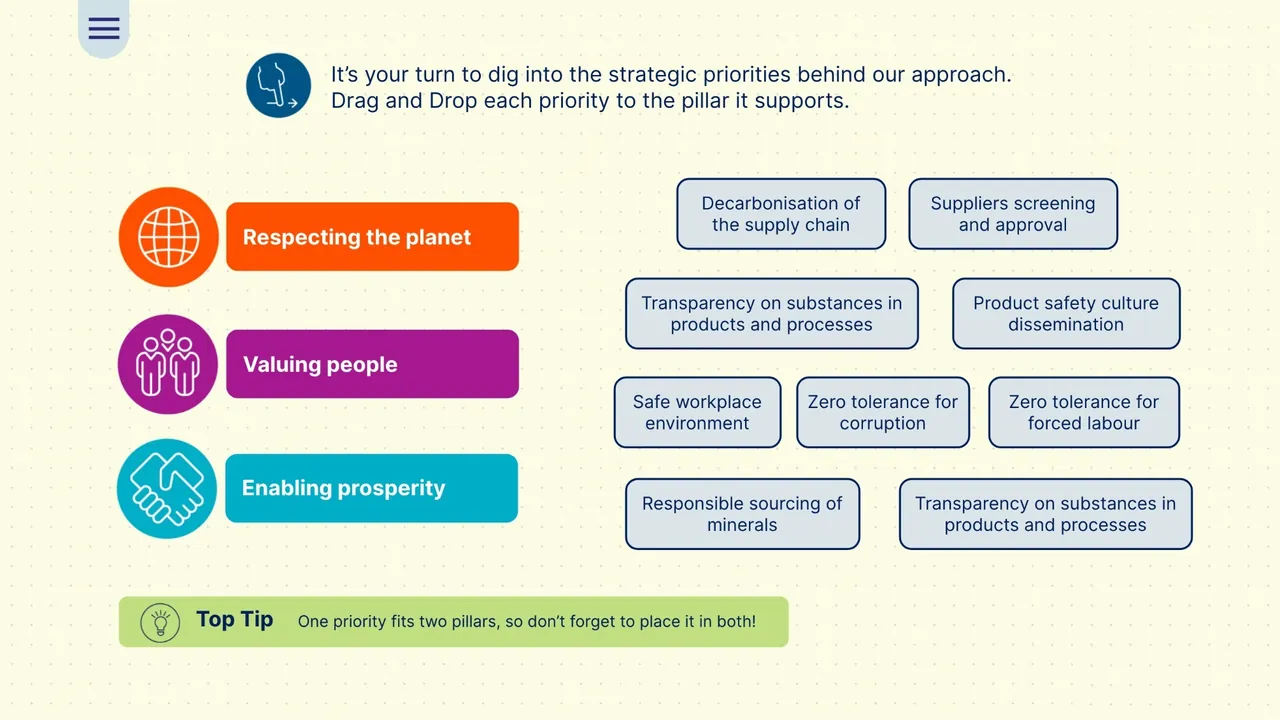
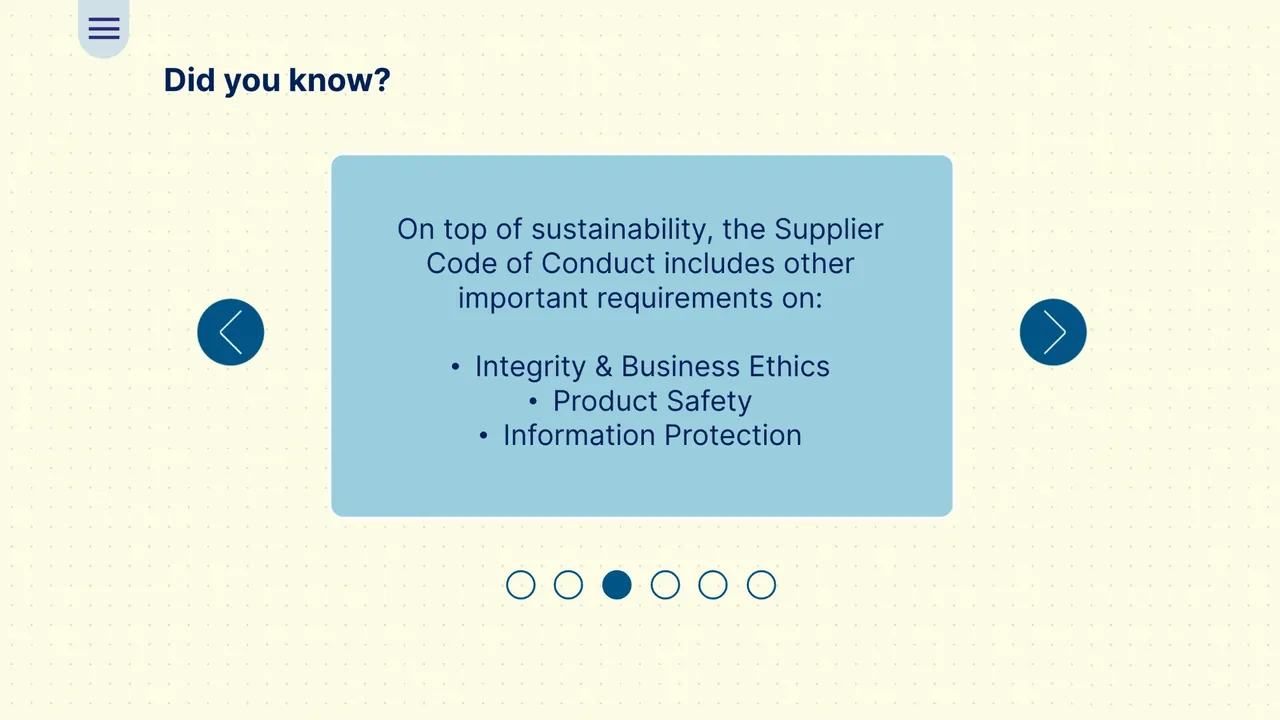
- 4Activities that ask people to place things: priorities onto pillars, initiatives onto stages of the cycle, plus a “Did you know?” carousel on the Code and the full Code to download in several languages.
The idea, and why it workedA cycle, not a signature
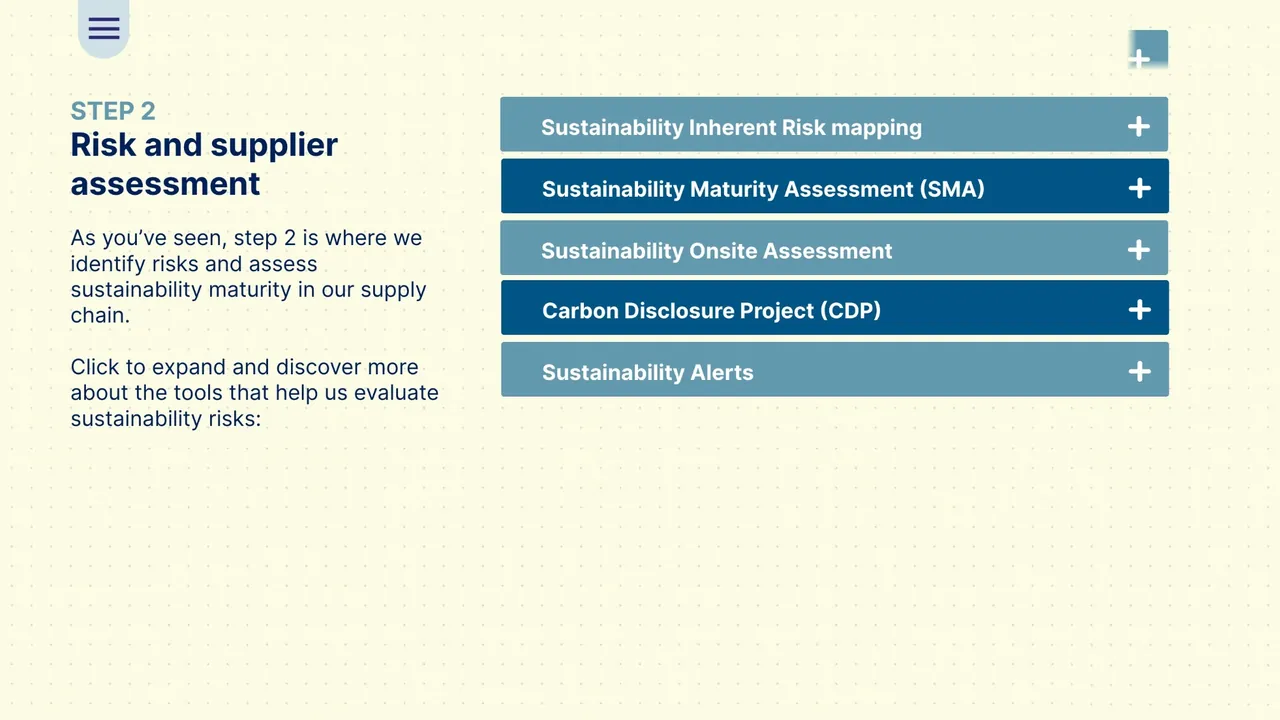
The course gives people two shapes to hold. The first is three pillars: respecting the planet, valuing people, enabling prosperity. Every requirement and initiative belongs to one of them, and learners prove it by dragging each priority, from supply chain decarbonisation to zero tolerance for forced labour, onto the pillar it supports. The second is a cycle. Suppliers commit through contractual clauses and the Code of Conduct. They are assessed through risk mapping, maturity assessments and on-site audits. They are asked and helped to improve. Then the cycle starts again.
It worked because it showed what happens after the signature. A code people only sign is easy to forget. A code that sits at the start of a cycle they run every year is part of the job.